
RPE for COSHH: Selection, Fit and Daily Use at Work
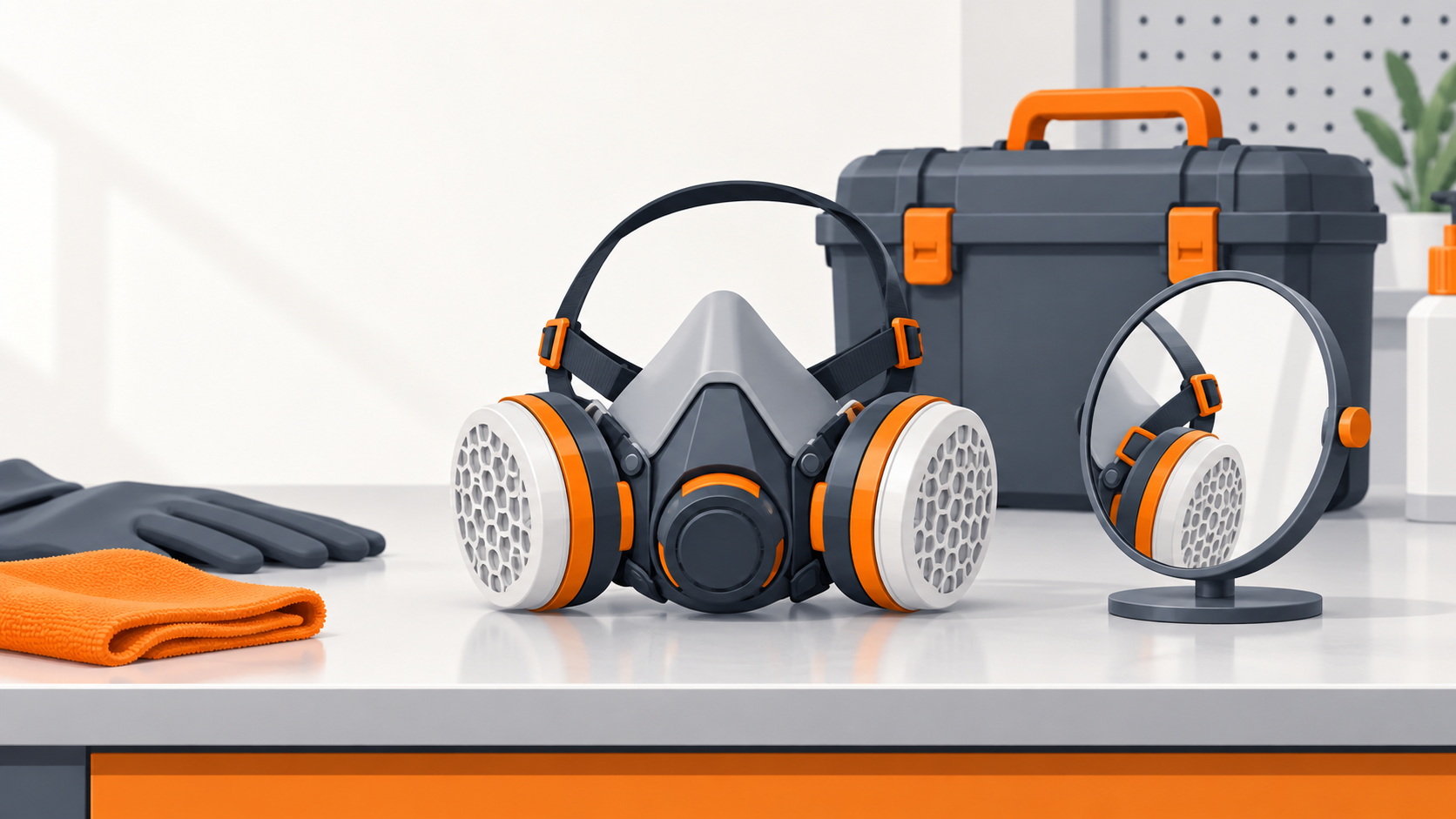
- Respiratory protective equipment (RPE) should be selected for the substance, exposure level, task and wearer.
- Tight-fitting RPE relies on a suitable fit and correct use; a generic mask instruction is insufficient.
- RPE supplements source controls where exposure cannot be adequately prevented by other means.
- Storage, inspection, maintenance and replacement are part of protection, not administrative extras.
RPE for COSHH protects an individual from inhaling hazardous substances when other controls do not adequately prevent exposure. Selecting it starts with the assessment of the substance and task, then checks the device against the person who will wear it. A box of masks in a cupboard is not a respiratory protection programme.
When is RPE appropriate?
The Health and Safety Executive (HSE) advises preventing exposure where possible and using personal protective equipment with other controls when exposure cannot be adequately controlled by other means. Its COSHH assessment guide warns against automatically choosing PPE first. Enclosure, process changes and extraction may protect more people and depend less on individual fit and behaviour.
RPE can be needed for residual exposure during normal work, particular maintenance tasks or a carefully planned short intervention. Describe which situation it covers. Do not extend a device selected for a routine low-exposure task to an unknown spill or a confined space. Conditions outside the assessment may require specialist arrangements and a different response.
The task record should identify the contaminant, likely concentration or exposure scenario, physical form, work duration, mobility, other protective equipment and any effect on communication or vision. A product safety data sheet may suggest RPE, but it cannot specify every workplace concentration or wearer. Seek competent advice where exposure is uncertain.
How is suitable RPE selected?
Selection involves both the filter or air supply and the facepiece or hood. Different filters address particles, gases or vapours, and a device must provide enough protection for the assessed exposure. HSE's RPE basics and COSHH Essentials RPE sheets provide the framework for choosing and using equipment. Avoid choosing solely by price, appearance or a worker's preference for a familiar mask.
Tight-fitting RPE needs to seal to the face of the individual wearer. A fit test supports selection of a model and size that can seal; a user seal check is still needed each time it is worn. Facial hair or other equipment may interfere with the seal. Where a tight-fitting device cannot be used reliably, a suitable alternative type may be required. The assessment should make these issues visible before the task starts.
Consider the physical work. A device that is uncomfortable during strenuous activity may be loosened or removed. A filter can become unsuitable for the duration or contaminant. RPE must be compatible with eye and head protection. Ask users to try the selected arrangement in the actual work area and report problems.
What training and checks make RPE reliable?
Train each user to put the device on, check fit, recognise damage, understand its limits, leave the area if it fails and remove it without contaminating themselves. Demonstration is more useful than a signature against a slide deck. Supervisors should know how to recognise incorrect use and what action to take when equipment is missing or defective.
Reusable equipment needs inspection, cleaning, storage and maintenance. Set responsibilities for replacement filters and damaged parts. Disposable equipment still needs suitable storage before use and a clear disposal route after contamination. HSE's control measures guidance treats maintenance, working methods and training as essential to sustained control.
Record the selected type, fit-test status where applicable, user training and the tasks for which it is authorised. Avoid a universal “RPE required” note across all products. A later material or process change may alter the contaminant and make the original selection unsuitable.
How should RPE use be reviewed?
Observe the task periodically. Is the device worn throughout exposure, or removed to speak or cool down? Are filters changed according to the plan? Are workers reporting breathing difficulty or discomfort? A recurring workaround signals that the method needs improvement, even if the RPE itself is certified.
Review after monitoring results, symptoms, incidents, product changes or ventilation failures. If exposure can be reduced further at source, do that rather than assuming RPE is the permanent answer. HSE's good control principles emphasise proportional, effective controls and checking them in use.
Link the task assessment to current product information through the Safe Foundry workflow, then keep fit and maintenance evidence with the appropriate equipment records. The goal is that every wearer knows why the device was chosen, when it is needed and what to do if it cannot be used correctly.
What would an RPE decision record look like?
For each authorised task, record the contaminant or exposure scenario, why source controls do not fully prevent exposure, the selected device and filter or air supply, the expected protection and its limitations. Name who can use it, what fit evidence is needed and what conditions require leaving the area. Keep the technical selection and user instruction connected, but make the instruction simple enough to use on shift.
Suppose a maintenance worker must briefly open a dusty enclosure after normal extraction has stopped. The assessment should ask whether the task can wait until settled material is removed or the equipment can be cleaned by a less exposing method. If RPE remains necessary, the selected device must suit the dust, task duration and wearer, and the method must address contamination while removing clothing. The answer is not obtained by borrowing a mask used for a different job.
What should a pre-use check cover?
The worker confirms the correct device for the task, checks the facepiece, straps, valves and filter or air supply as applicable, and performs the prescribed user check. They verify the equipment is clean, within its service life and compatible with other PPE. A supervisor should know what to do if the check fails. A spare device of the same type is not automatically suitable for another person's face.
Storage matters between uses. A respirator left on a contaminated bench may expose the user when it is next handled. Keep it clean and protected according to manufacturer instructions. Replace filters and parts under a planned system rather than waiting for an obvious smell or discomfort; some hazards offer no useful warning. Record maintenance so an apparently serviceable device can be traced.
How do you know the programme is working?
Observe use during a normal task, including breaks, communication and removal. Ask whether heat, exertion or poor visibility causes the device to be lifted. Look for a mismatch between recorded selection and equipment actually stocked. Review monitoring and worker reports, but do not interpret a single low measurement as proof every wearer is protected.
If the same problem recurs, improve the task or choose a more workable control. A successful RPE programme is not the one with the most signed forms; it is the one where the selected equipment is available, fits the people who need it and is used correctly whenever exposure occurs.
Check the programme when staff roles change. A new worker may need a different facepiece size or device, and an existing worker may move to a task with a different contaminant. Keep selection linked to the authorised task and wearer, then ensure procurement stocks the equipment actually specified. If the chosen device is unavailable, the answer is to review or stop the work, not to use whatever mask happens to be nearby.
Review whether the same task could be redesigned to reduce the need for RPE, especially when users repeatedly struggle with comfort or communication.
The help centre can support organising the linked product records.
Frequently asked questions
Can a disposable mask replace broken extraction?
Do not assume so. The failure changes exposure conditions and requires review of whether any alternative control is adequate.
Does one model of tight-fitting respirator fit everyone?
No. Fit depends on the individual wearer and model; suitable fit testing is needed for tight-fitting RPE.
Is a fit test the same as a daily seal check?
No. Fit testing helps select a suitable device for a person, while the user checks the seal each time it is worn.
Can workers choose any filter that fits their mask?
No. The filter must be suitable for the assessed contaminant and device, with replacement and use instructions followed.
Workplace exposure limits in EH40 help assess airborne exposure in Great Britain. Learn what the figures mean, what they miss and how to review controls.
Spray Painting COSHH: Assessing Mist and Controls at WorkSpray painting COSHH assessments must consider aerosol mist, other workers and the whole paint task. Learn how to review booths, RPE and clean-up controls.
SDS Section 7: Handling and Storage in Practice at WorkSDS Section 7 covers safe handling and storage. Learn how to turn supplier conditions into workable controls for your task, containers and storeroom.