
Spray Painting COSHH: Assessing Mist and Controls at Work
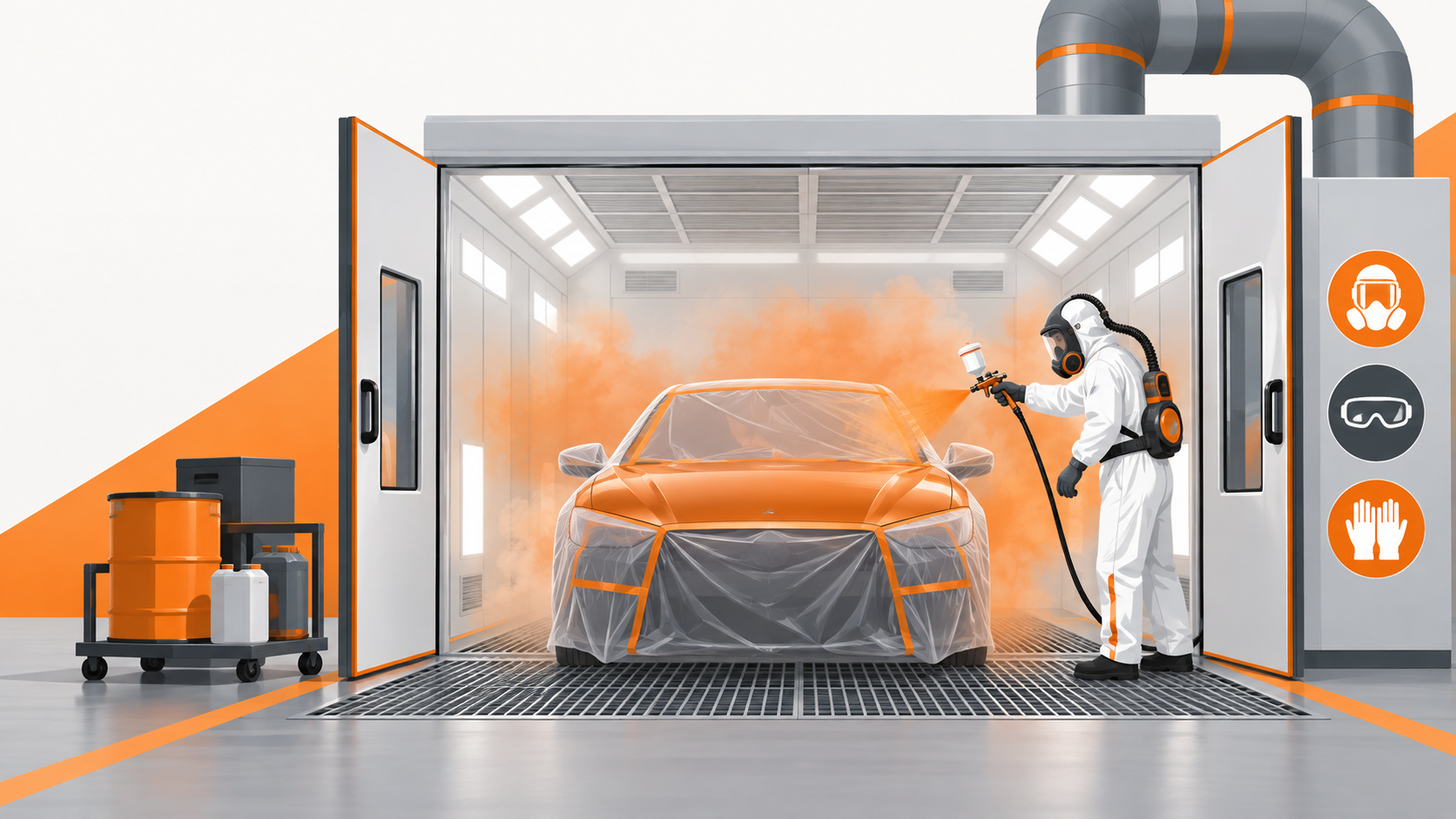
- Spray painting can create airborne mist and expose people beyond the painter, so application method and work area matter.
- The assessment should cover mixing, spraying, curing, gun cleaning and waste, not only the moment of application.
- Isocyanate-containing products need particular care because HSE identifies occupational asthma and skin risks.
- Booth performance, clearance time, suitable RPE and health surveillance decisions must be task-specific and reviewed.
A spray painting COSHH assessment must follow the entire paint job, from mixing and spraying to gun cleaning and waste. Spraying can turn a liquid into fine airborne mist that reaches the painter and other people. The required controls depend on the exact product, process, enclosure and working method; a generic “wear a mask” note is inadequate.
What makes spraying different from brushing?
Atomising paint creates an aerosol, so exposure can occur through inhalation as well as skin and eye contact. Overspray may move beyond the immediate target and remain in the air after spraying stops. The Health and Safety Executive (HSE) says spraying isocyanate products can create high exposure to mist droplets and can affect people nearby. See its construction spraying guidance.
Describe the product and method precisely: two-pack or other formulation, amount, spray equipment, duration, booth or room, ventilation and nearby work. The safety data sheet (SDS) provides hazard information, but HSE warns that it is not the workplace risk assessment. Do not assume all paints or all spray tasks have the same hazard profile.
Consider whether a non-spray method can meet the job. HSE's COSHH guidance uses applying by brush instead of spraying as an example of preventing exposure at source. The choice must still meet technical requirements and be assessed for any new exposure, such as prolonged skin contact.
Which steps belong in the assessment?
Mixing may involve concentrated components, open containers and splashes. Spraying involves airborne mist and possible exposure to others. Curing and booth clearance affect when people can re-enter. Gun cleaning can create a separate solvent or isocyanate exposure. Waste and contaminated protective equipment need a defined route. HSE's vehicle spray painting guidance identifies several hazardous substances and tasks in motor vehicle repair, not just the spray pass.
Use a task map rather than a product list. For each step, record who is present, how release is prevented, what equipment is used, how it is checked and what triggers a stop. Include a nearby worker opening a booth door or collecting a finished item too soon. An assessment that covers only the painter can miss people exposed during clearance or cleaning.
If the job uses an isocyanate-containing product, seek current task-specific HSE and competent advice. HSE identifies asthma and dermatitis risks and describes enclosed extracted booths, suitable respiratory protection and health surveillance among controls for relevant vehicle spraying. Do not infer a specific device or clearance time from this general article.
How are booth and RPE controls checked?
The booth or room should be designed and maintained for the process. Its extraction and clearance arrangements need to be understood by users, including how long to wait before removing RPE or opening doors. A visible sign or indicator can help only if it reflects a tested arrangement. HSE's isocyanate spray booth guidance addresses managing these systems in detail.
Select respiratory protective equipment for the contaminant, exposure conditions and wearer. Tight-fitting devices require suitable fit; air-fed equipment has its own supply and maintenance demands. Train users to recognise failure and leave the area. RPE should support enclosure and extraction, not excuse an uncontrolled booth or spraying near unprotected workers.
Check the system before each job and maintain formal examination and testing where required. If extraction fails or the task changes, stop and review. The correct response to a failed booth is not to assume a shorter spray time makes exposure acceptable.
What should happen after the job?
Record any change in paint, equipment, throughput, booth performance or worker symptoms. Review cleaning, waste and re-entry arrangements as closely as application. Discuss near misses with painters; they often know when mist escape or equipment performance has changed before a formal check catches it.
Link the current SDS and activity assessment using the Safe Foundry workflow, then retain booth, RPE and occupational health evidence in the appropriate controlled records. The feature overview shows how chemical documents and assessments can be connected. The aim is a method in which every exposure point has a named, working control.
What should a pre-spray check include?
Confirm the exact paint, hardener and cleaning products against the approved task. Check the booth or room is available and its extraction indicators show the expected condition. Verify the intended spray equipment, RPE, protective clothing and emergency arrangements. Know who can enter during spraying and who confirms clearance before the space is used for another job. A checklist should be short enough to complete before every job and linked to a clear stop response when something is wrong.
The painter should understand what changes are allowed without reassessment. A different nozzle, spray pressure, coating formulation or job size may alter mist generation or booth loading. The supervisor should review such changes before treating the previous exposure decision as current. A paint label or colour change can conceal a more consequential formulation change.
How could the task be mapped for review?
Use rows for preparation, mixing, transfer, spraying, clearance, de-masking, gun cleaning and waste. For each, record the substance or mixture present, likely route of exposure, people nearby, primary control, supporting PPE, check and failure action. This reveals stages that a single “spray painting” row tends to miss. For example, a well enclosed spray pass does not control an open solvent wash of the gun on a bench outside the booth.
Observe one complete job and compare the written sequence with actual work. Is the booth door opened before clearance? Are contaminated gloves used to touch shared controls? Does cleaning occur in the intended area? Ask painters which controls are awkward or frequently unavailable. Their answers can point to a design or scheduling problem that a generic instruction cannot fix.
What evidence supports a later review?
Retain the assessment version, SDS revisions, booth tests, maintenance, RPE selection and fit information, training and relevant monitoring or health surveillance decisions. Keep personal medical details separately under appropriate confidentiality. Record incidents and near misses with the work stage where they occurred. A reviewer can then see whether a product, process or control changed before symptoms or test results appeared.
If controls fail, document the immediate work decision and the verification needed before restarting. A repair note alone does not show that capture is restored for the specific spray task. The plan should return to one question: can the work be done without uncontrolled mist reaching the painter or anyone nearby?
How should neighbouring work be controlled?
The painter is not the only person who can encounter mist or residue. Map adjacent bays, shared doors, walkways and maintenance access during spraying and clearance. Specify who keeps the boundary, how they know work is in progress and what happens if someone needs urgent access. A warning sign alone may be weak if staff routinely walk through that route to collect tools.
After the booth is declared clear, consider the next person handling the item or cleaning the area. Contaminated gloves, masking materials and waste can transfer residues even when airborne mist has settled. Include those handoffs in training and supervision, and review them when the job sequence or staffing changes.
Speak with the people who clean the booth and remove masking material. Their work may occur after spraying has ended, but it can still involve residues and contaminated equipment. Include their method and protection in the assessment review.
Frequently asked questions
Is spray painting covered by COSHH if the paint is used only occasionally?
Frequency is one assessment factor, but occasional work can still create significant mist exposure and needs suitable controls.
Can a painter use the SDS as the COSHH assessment?
No. The assessment must also describe the local spray method, booth, people exposed and controls.
Does the spray booth remove the need for RPE?
That depends on the assessed product and conditions; relevant HSE guidance may require both enclosure and suitable respiratory protection.
When can someone enter after spraying?
Follow the tested booth or room clearance arrangement for the specific process rather than an assumed universal time.
Workplace exposure limits in EH40 help assess airborne exposure in Great Britain. Learn what the figures mean, what they miss and how to review controls.
SDS Section 9: Physical Properties That Change RiskSDS Section 9 lists physical and chemical properties. Learn which values affect workplace exposure, storage and spill planning, and how to use them.
SDS Section 7: Handling and Storage in Practice at WorkSDS Section 7 covers safe handling and storage. Learn how to turn supplier conditions into workable controls for your task, containers and storeroom.