
SDS Section 7: Handling and Storage in Practice at Work
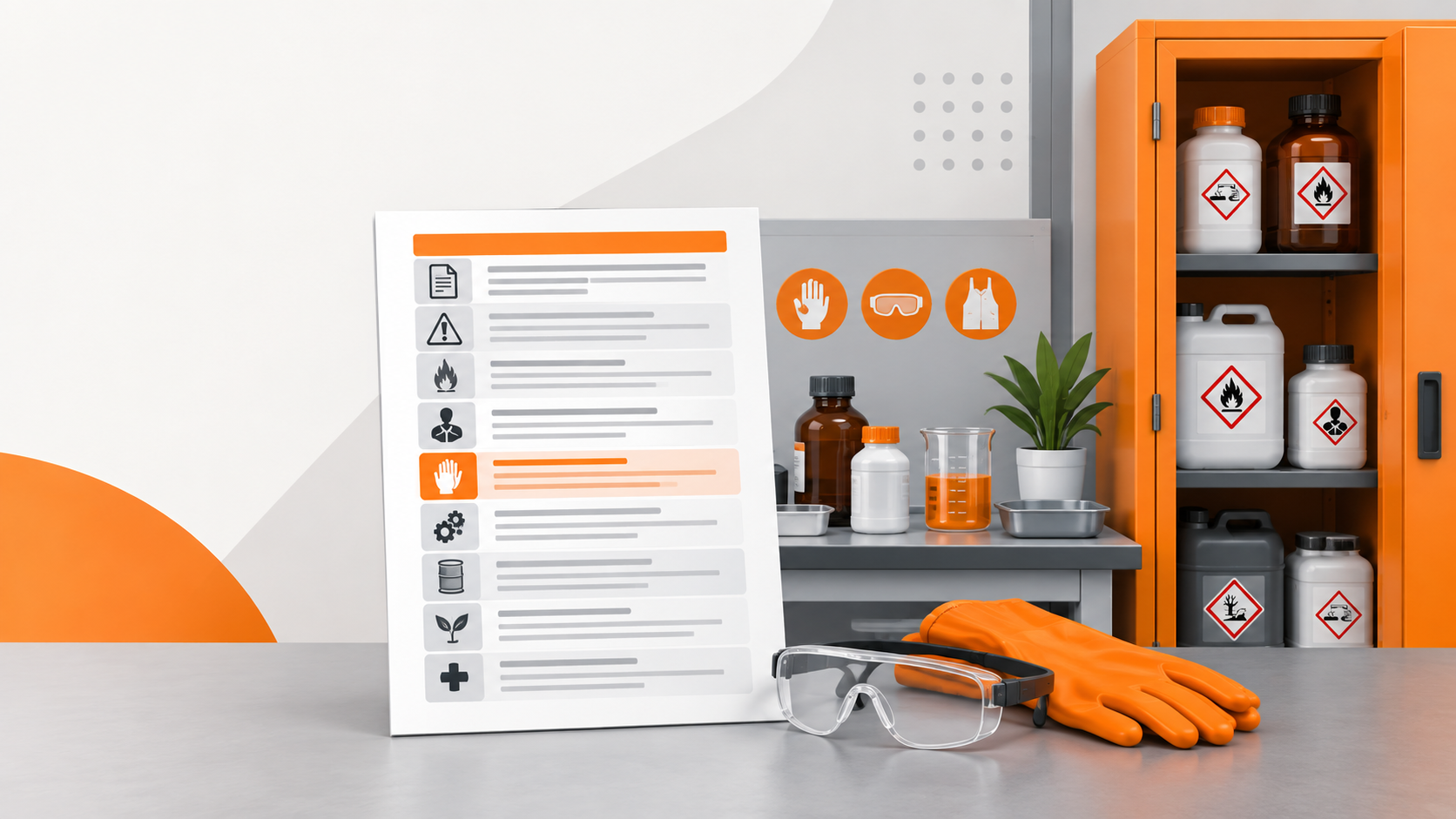
- SDS Section 7 gives supplier advice on handling, storage conditions, incompatibilities and identified uses.
- The workplace must connect that advice to actual container sizes, transfer methods, rooms and people.
- Handling and storage should be assessed as linked steps because a good storeroom cannot correct an unsafe transfer.
- A change in product, concentration or location should trigger a check of Section 7 assumptions.
SDS Section 7 is where supplier advice on handling and storage becomes especially useful for workplace planning. It may identify conditions to avoid, incompatible materials, ventilation or packaging considerations. The employer still has to decide how those conditions apply to its containers, tasks and rooms.
What information is in Section 7?
The REACH safety data sheet structure puts precautions for safe handling in Section 7.1, conditions for safe storage including incompatibilities in Section 7.2, and specific end uses in Section 7.3. The legislation text gives examples including hygiene, ventilation, temperature, sunlight, packaging compatibility and separation from incompatible substances. The current SDS for the exact product determines which details apply.
Read Section 7 alongside Section 2 hazards, Section 9 physical properties and Section 10 reactivity. A single sentence about storage temperature may make more sense once you understand the material's physical form and stability. HSE says SDS information supports risk assessment but is not the workplace assessment.
Supplier wording can be general. “Store in a cool, well-ventilated place” does not itself identify which cupboard on your site, how ventilation is checked or how a large delivery is handled. Translate broad advice into a location and method that can be verified.
How do handling conditions become task controls?
Walk through opening, measuring, decanting, applying, cleaning and closing the product. Note release points, splashes, dust or vapour, contaminated caps and tools, and people nearby. HSE's COSHH assessment guidance asks about exposure routes, frequency, duration and control measures. Section 7 helps with precautions, but only observation supplies the local facts.
Prefer a method that reduces release at source: suitable closed transfer, controlled dispensing, lower height of pour or an enclosed process where practical. Specify the approved quantity, equipment and work area. If the supplier identifies a use limitation, check whether the planned activity is within the intended use and seek advice when it is not.
Hygiene advice should be made possible. If the procedure says to wash hands before eating but the nearest facility is inaccessible during the shift, the written control is weak. Provide appropriate facilities and a way to remove contaminated clothing or gloves without spreading residue.
How do storage conditions become a site plan?
Map what is stored, in what container size, at which shelf or cabinet, and near which other products. Check compatibility and segregation using product-specific information; do not infer it from bottle colour or a broad category label. HSE's assessment page calls for correct labelling and separation of incompatible materials, such as acids and caustics.
Consider container integrity, temperature, light, ventilation, spill containment, access control and movement into and out of storage. A storage plan should specify who inspects it and what they check. A clean storeroom can still be unsafe if every withdrawal requires lifting a heavy drum above shoulder height.
When material is decanted, the receiving container needs its own identity and suitable storage. A Section 7 condition for the supplier package may not automatically apply to an improvised bottle. Check container suitability before transfer and keep local labels clear.
How should Section 7 be reviewed?
Review the plan when an SDS changes, a product is substituted, stock levels grow, containers change or the store is rearranged. Observe whether the practical method still matches the recorded one. Check near misses such as leaking caps, mis-shelved products or blocked ventilation; they reveal control problems before injury occurs.
The Safe Foundry feature overview shows how product, document and location information can be connected, while the help centre helps teams organise those records. The test of a good Section 7 translation is that a worker can point to the right container, place, transfer equipment and response if a condition cannot be met.
What would a handling-to-storage walk-through reveal?
Follow one container from delivery through the storeroom, work area and return. At each handoff, note who checks identity, whether the label remains legible and whether the container is opened or transferred. A safe cabinet is only one point in the chain. Exposure may occur while lifting a package from a high shelf, carrying it through a busy corridor or returning a bottle with residue on its outside.
Use the Section 7 advice to ask specific questions. If it says keep the container tightly closed, does the work method provide a suitable cap and a place to close it promptly? If it calls for ventilation, does the actual transfer area have a verified control? If it lists incompatible materials, are they separated in both storage and the shared waste route? The answers should be observable rather than inferred from a written rule.
How can a site-specific storage instruction stay short?
A worker-facing instruction can name the exact product or product group, approved location, maximum normal container size, separation rule, condition check and action for a damaged or unlabelled package. Keep the fuller reasoning in the assessment and source SDS. This lets the person putting stock away make the right decision without searching through several pages of hazard text.
For example, a storeroom plan might use a location code, photograph and shelf inspection routine. The photograph shows where a package goes, but the decision to store it there should rest on product-specific compatibility and quantity assessment. When stock changes, the owner revisits both the instruction and the layout. A visual guide that is never updated can become a source of error.
What should happen after a handling near miss?
If a container nearly falls, leaks during decanting or is found on the wrong shelf, investigate the step that made the mistake likely. Was the approved location full? Was the label damaged? Did a replacement package have a new shape that did not fit the existing rack? Did a contractor use the room without the same briefing? Change the method or layout and verify the improvement.
Keep the old and new SDS revisions linked to the decision. A changed Section 7 may call for a different location or equipment, while a local incident may reveal that the supplier's general advice needs more precise site controls. The goal is a handling and storage route that remains safe as products, quantities and people change.
Who owns the link between the SDS and storeroom?
Assign a person or role to review new supplier sheets and product changes against the storage plan. That owner should know which locations and tasks use the product and how to alert supervisors when a condition changes. Receiving staff should have a simple route to quarantine a mismatched or damaged delivery rather than placing it on the nearest shelf while the question waits for an email reply.
The owner also needs feedback from store inspections. Repeated leaks, heat, blocked access or mixed stock may show that the approved plan is difficult to follow. Record the observation, revise the physical arrangement and check the result with the people who move containers. A storage instruction that cannot survive normal deliveries needs redesign, not more reminders.
Include returns and partly used containers in the plan. They are often more likely to have damaged caps or residue than unopened stock, and they may be placed back in a different location after use. A clear return check closes that gap.
Frequently asked questions
Is SDS Section 7 enough to design a chemical store?
No. It supplies product conditions; the site must assess quantities, layout, other materials, movement and emergency arrangements.
Does “well ventilated” mean a window is enough?
Not automatically. The required control depends on the substance, quantity, release and space; get competent advice where uncertain.
Can two products share a cabinet if their labels look similar?
Similar labels do not prove compatibility. Check the exact product information and the site's segregation plan.
Should Section 7 be reviewed after decanting into a new container?
Yes. The new container and handling method may change compatibility, exposure and storage assumptions.
Workplace exposure limits in EH40 help assess airborne exposure in Great Britain. Learn what the figures mean, what they miss and how to review controls.
Spray Painting COSHH: Assessing Mist and Controls at WorkSpray painting COSHH assessments must consider aerosol mist, other workers and the whole paint task. Learn how to review booths, RPE and clean-up controls.
SDS Section 9: Physical Properties That Change RiskSDS Section 9 lists physical and chemical properties. Learn which values affect workplace exposure, storage and spill planning, and how to use them.