Flash Point vs Autoignition Temperature: What’s Different?
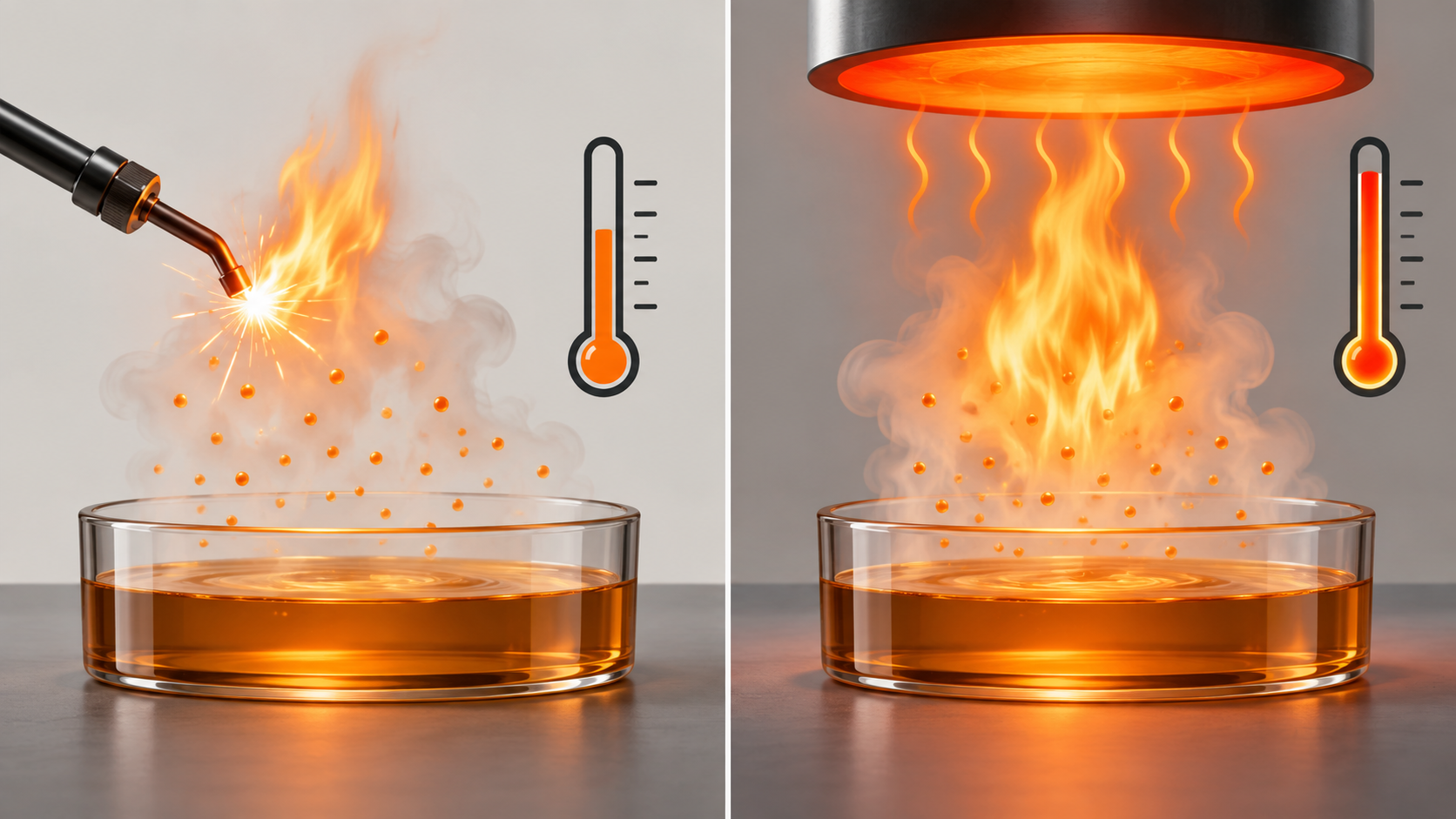
- Flash point is the lowest test temperature at which a liquid gives off enough vapour to ignite momentarily when an ignition source is applied.
- Autoignition temperature is the temperature at which a substance can ignite in air without an external spark or flame under specified conditions.
- The two properties measure different behaviour and cannot be used as substitutes or ranked as a single safety score.
- A DSEAR assessment must combine property data with release, operating temperature, ventilation, ignition sources and consequences.
Flash point tells you when a liquid can generate enough vapour to ignite when an ignition source is applied. Autoignition temperature tells you when a substance may ignite without an external spark or flame under specified test conditions. They describe different ignition scenarios and both need workplace context.
What is flash point?
Flash point is the minimum temperature at which a liquid, under specified test conditions, gives off enough flammable vapour to ignite momentarily when an ignition source is applied. HSE uses this definition and explains that flash point helps classify the fire hazard of flammable liquids (HSE dangerous substances).
Flash point concerns vapour above a liquid and an applied ignition source. It does not mean the liquid itself must reach a flame-like temperature.
What is autoignition temperature?
Autoignition temperature is the temperature at which a substance can ignite in air without an external flame or spark under specified conditions. It is especially relevant to hot surfaces, ovens, heaters, engines and process temperatures.
The reported value is test-dependent. Treat it as property data for assessment, not an exact guaranteed workplace boundary.
How are flash point and autoignition temperature different?
| Question | Flash point | Autoignition temperature |
|---|---|---|
| What is tested? | Vapour generation from a liquid | Spontaneous ignition in air |
| External ignition source? | Yes | No |
| Main workplace concern | Vapour meeting sparks, flames or other ignition | Substance or vapour contacting sufficiently hot conditions |
| Typical SDS location | Section 9 | Section 9 |
| Does it prove safe storage? | No | No |
A liquid may be below its flash point yet still require control if it is sprayed, forms mist, contaminates porous material or is used near hotter equipment. A high autoignition temperature does not make sparks or flames irrelevant.
How does flash point affect DSEAR assessment?
Compare flash point with normal and abnormal temperatures and the way the liquid is released. Ask:
- Is the liquid heated or near a hot process?
- Can spraying or atomisation create ignitable mist?
- Can vapour accumulate in pits or enclosures?
- What maximum quantity can escape?
- Which ignition sources are present?
- How effective is ventilation?
HSE notes that liquids with a flash point of 60°C or below are classed as flammable liquids, while higher-flashpoint liquids can still create risk when used above their flash point or under other hazardous conditions (HSE DSEAR in detail).
How does autoignition temperature affect controls?
Compare autoignition information with the highest credible surface and process temperatures, including faults. Consider heaters, bearings, exhausts, lighting, ovens, friction and electrical equipment.
Do not design with the test value as the only margin. Surface geometry, contamination, airflow and substance condition can affect ignition behaviour. Use competent standards and equipment selection where explosive atmospheres may occur.
HSE explains that electrical equipment can create hot surfaces or sparks and that appropriate equipment is required in potentially explosive atmospheres (HSE explosive atmospheres).
Can you compare the two numbers directly?
No. A lower flash point does not predict a lower autoignition temperature, and neither value alone ranks total fire risk. They use different test methods and answer different questions.
For example, a room-temperature solvent may be above its flash point and continuously form ignitable vapour, making spark control critical even though the autoignition temperature is far higher. A high-temperature process may need hot-surface control even with no open flame.
Where should you find reliable values?
Start with the verified supplier SDS for the exact product, then resolve missing or conflicting data. Check Section 9, units, test method and whether the value applies to a mixture or component. International database values for a pure substance may not describe a formulated product.
The SDS workflow should keep product matching and source version visible. Ask the supplier or a competent specialist where the assessment depends on uncertain data.
What else belongs in the fire-risk picture?
Use property data with the process and location. Include lower and upper explosive limits, vapour pressure, boiling point, density, decomposition, incompatibility, quantity, release rate, ventilation, confinement and people.
The DSEAR assessment features help organise these inputs, while the assessor decides how they interact.
What is a useful worked example?
Consider solvent wiping beside heated equipment. The flash point helps determine whether room-temperature vapour can ignite from switches or static. The autoignition temperature helps evaluate hot surfaces. The assessment also needs the amount on wipes, evaporation, ventilation, waste-bin design and spill scenario.
Use the help centre for record guidance. The key is to connect each value to its ignition mechanism rather than copy both numbers into an assessment with no decision.
What is the difference between flash point and boiling point?
Boiling point describes a phase-change condition, while flash point describes momentary ignition of vapour under a specified test. A liquid can produce hazardous vapour well below its boiling point. Using boiling point as the sole test for vapour risk can therefore miss normal-temperature releases.
Vapour pressure and evaporation conditions help explain how readily vapour forms. The assessment should use the group of relevant properties rather than select whichever number looks most reassuring.
Why do closed-cup and open-cup flash points differ?
Flash point depends on the test method because vapour is retained differently. Closed-cup methods generally confine vapour more than open-cup methods and can produce different values for the same liquid. Record the method when it is supplied and use the classification and assessment framework appropriate to that data.
Do not average values from different sources. If two SDSs for the supposedly same product give materially different flash points, first verify product, formulation, version, units and method, then ask the supplier.
How should a mixed product be handled?
Use data for the exact mixture where available rather than selecting one ingredient's property. Interactions and concentrations can change volatility and ignition behaviour. A pure-component autoignition temperature or flash point may not represent the formulated product.
During dilution or mixing, consider the intermediate stages as well as the final mixture. Adding a flammable concentrate to water can create a brief open-transfer scenario even if the final diluted product is not classified the same way.
What review triggers apply to these properties?
Review when the product, temperature, release form or ignition environment changes. Triggers include reformulation, a revised SDS, new heating, spraying, different ventilation, enclosure, altered quantity, hot work or new electrical equipment.
Confirm that temperature alarms, shutdowns or equipment ratings remain suitable. If the assessment depends on staying below a defined condition, record how that condition is controlled, measured and maintained during faults.
What should workers be told?
Translate the properties into task rules rather than teaching isolated definitions. Workers need to know which releases and ignition sources matter, why containers must remain closed, what temperature or ventilation conditions are required and what to do after a spill or equipment fault.
Avoid saying that a liquid “cannot burn below its flash point” or that a surface is safe merely because it is below a tabulated autoignition value. Explain the limits of the data and the controls chosen for the real work.
How do mists change the flash-point discussion?
A fine combustible mist can present ignition risk outside the simple bulk-liquid flash-point picture. Spraying, high-pressure leaks and vigorous agitation increase surface area and can suspend droplets in air.
Assess the release method, droplet formation, enclosure, ventilation and ignition sources. Do not conclude that a high-flashpoint liquid is harmless when the process deliberately atomises it.
What should be recorded in a DSEAR assessment?
Record the value, source, method where given and workplace decision. State normal and maximum temperatures, release form, credible ignition sources, safety margin and controls.
If data conflict or are missing, record the query and interim restriction. Review the decision when formulation, SDS, process temperature, equipment or ventilation changes. This turns property data into an auditable control basis.
Frequently asked questions
Does a liquid burn below its flash point?
Flash point is a test value for momentary ignition of vapour. Sprays, mists, contamination or unusual conditions can still create risks that the simple liquid test does not capture.
Is autoignition temperature the same as fire point?
No. Fire point concerns sustained burning after external ignition, while autoignition occurs without an external flame or spark under test conditions.
Which property is more important for DSEAR?
Neither is universally more important. The process determines whether external ignition, hot surfaces or both are credible.
Can I use the value for a pure ingredient in a mixture?
Not without evidence that it represents the mixture. Prefer tested supplier data for the exact product and obtain clarification where needed.
Check that an SDS matches your chemical by comparing product identifiers, supplier, concentration, form, label classification and intended use.
Chemical Stocktake Checklist: What to Record and CheckUse this chemical stocktake checklist to reconcile containers with your register, verify SDS links, find storage issues and assign follow-up actions.
Chemical Storage Inspection Checklist for UK WorkplacesUse this chemical storage inspection checklist to find container, label, segregation, quantity, spill-control and housekeeping problems early.