
SDS Section 10: Stability and Reactivity at Worksites
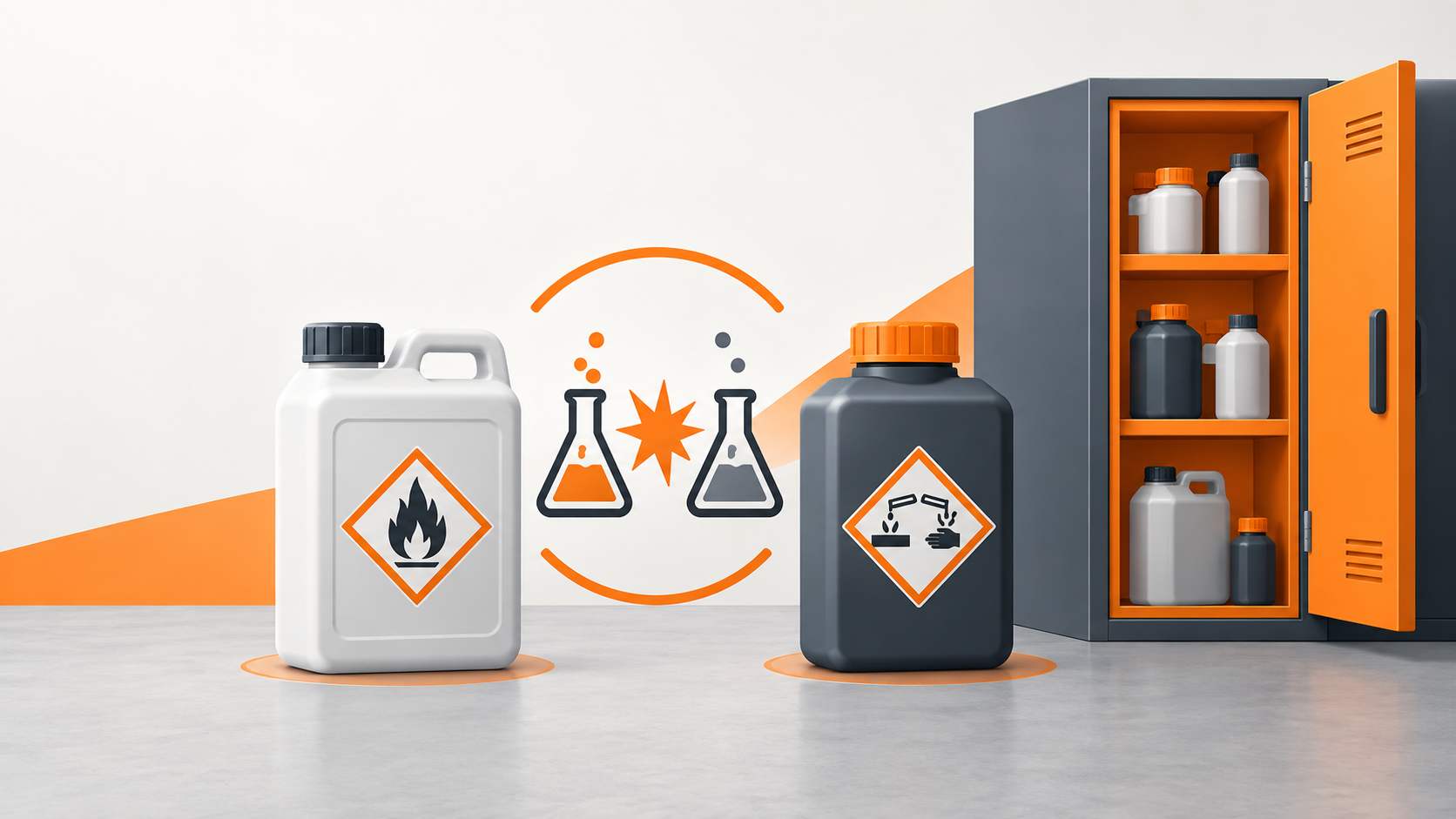
- SDS Section 10 describes chemical stability, possible hazardous reactions and conditions or materials to avoid.
- Incompatibility information should inform storage, transfer, cleaning and waste decisions for the exact product.
- A product stable in its original container may behave differently when heated, mixed or contaminated.
- Uncertainty about a planned combination should be resolved before work, not tested by trial in the workplace.
SDS Section 10 explains how a chemical product may react or decompose under particular conditions. It is essential when a task heats, mixes, dilutes or stores a material near others. The workplace should use this information to prevent hazardous combinations and design controls for the actual process, rather than treating the supplier's “stable under normal conditions” phrase as a universal guarantee.
What does Section 10 cover?
The REACH safety data sheet structure includes stability, reactivity, possibility of hazardous reactions, conditions to avoid, incompatible materials and hazardous decomposition products in Section 10. The legislation text sets out this section's purpose. Read it for the exact product and current revision; related information may also appear in Sections 2, 5, 7 and 9.
“Stable under recommended conditions” is conditional. Ask what those conditions are: temperature, light, moisture, pressure, air exposure, container material or absence of another substance. A storage room or work process outside those conditions needs further assessment. The supplier may describe broad product behaviour, while the employer knows the precise equipment and neighbouring materials.
HSE says safety data sheets provide information for risk assessment but are not workplace assessments. Section 10 is therefore evidence for the decision, not a substitute for identifying local combinations and credible failures.
How can incompatibilities arise during normal work?
Mixing is the obvious route, but contamination can be less visible. A reused funnel, uncleaned pump, shared waste container or leaking bottle on a common tray can bring materials together unintentionally. A cleaning product may contact residues from an earlier task. A process may heat a product beyond the conditions described for storage. Walk through each stage and ask what else could contact the material.
Do not infer compatibility from similar packaging, colour or intended room of use. The HSE COSHH assessment guide advises correctly labelled containers and separation of incompatible materials, including acids and caustics. The exact segregation plan should use product-specific information and competent advice, especially where large quantities or complex mixtures are involved.
If a planned reaction is intentional, the assessment must include the expected products, energy release, containment and failure modes. A starting reagent's SDS may not describe the resulting mixture. Seek appropriate technical expertise rather than extrapolating from a single supplier sheet.
How does Section 10 affect storage and waste?
Translate conditions to avoid into a storeroom plan. Identify temperature, sunlight, moisture, ventilation, container integrity and nearby products where relevant. The rule should be testable: a named location, a check and an action if a condition is breached. “Keep away from incompatible materials” is weak unless the workers know which materials and where they are kept.
Waste is another interface. A used solution may contain reaction products or contaminants that make it different from the original product. Do not add it to a common drum simply because both containers are labelled “solvent” or “cleaner”. Characterise the waste stream and approve the route through a competent process.
In a spill, Section 10 can warn against a clean-up method or contact with other materials. Read it alongside Section 6 accidental release advice. A response plan should be prepared before a leak occurs, with a clear withdrawal threshold for unknown or uncontrolled reactions.
What should trigger a review?
Review when a supplier issues a new SDS, a product is replaced, a process temperature or method changes, a new material enters the store or an incident suggests unexpected behaviour. Compare the old and new Section 10 information and identify affected tasks rather than simply replacing the PDF. Train workers on any changed controls.
Linking product, SDS, storage and task records makes the review traceable. The Safe Foundry feature overview describes ways to connect chemical information, and the assessment workflow shows the task context that must be added. The central question remains concrete: under the conditions of this work, what can react, how is contact prevented and what happens if the planned control fails?
What would an incompatibility review cover?
For each product, list the materials, conditions and process steps named in Section 10. Then inspect how the product is received, opened, used, cleaned up and discarded. Could a shared funnel carry residue from another product? Could a wash bottle be mistaken for a compatible diluent? Could two waste streams meet in one container? The review should follow actual work, not stop at a storeroom diagram.
Document the evidence and decision. A site may decide to use separate transfer equipment, colour-coded locations and a clear waste route, but colour alone should never be the evidence that two substances are compatible. Keep product names and labels central. If a supplier warning is broad, ask for clarification rather than filling in a precise compatibility rule from memory.
How might “normal conditions” change during a task?
Consider a product stored in its closed original package at room temperature but used in a heated cleaning process. The supplier's statement of storage stability may not cover the heated use, especially if other materials are present. The assessment should examine operating temperature, open surface area, possible decomposition and how any release is contained. A changed method should be reviewed before routine use, not after an unexpected reaction.
Another change is contamination. A container may receive residue from an earlier operation through a reused tool or waste stream. The amount can be small yet still matter if the materials react. A clean, dedicated tool or closed transfer system may remove that failure route more reliably than an instruction to “avoid contamination” without a practical method.
What should workers be told?
Give workers concrete rules for the task: which product they may use, what it may not contact, how to keep tools and waste separate, and when to stop. Avoid asking them to memorise a long list of chemical names unrelated to their station. Put product identity and separation controls where the decision occurs. Train supervisors to review substitutions and unexpected residues rather than approving changes by similarity of product name.
For an abnormal event, the instruction should prioritise warning and withdrawal where the reaction or contents are uncertain. It should not encourage an untrained worker to neutralise, dilute or open a pressurised container. Use the current SDS and site emergency plan, then seek competent help. Afterward, review the upstream task and storage conditions that allowed the contact.
How can the control be verified?
Inspect segregation, tool identity, labels, waste containers and recorded process conditions. Ask workers to explain the stop point for an unknown mixture. A clean inspection sheet is less persuasive if shared funnels are visibly used across incompatible products. Fix the physical layout and equipment so the intended separation is easy to maintain during busy work.
When a near miss occurs, record the combination that almost happened and why. This may reveal a training gap, but it may also show that two similarly shaped bottles are stored together or that the approved waste container is too far away. Redesign the system and verify that the new method is used.
Keep a trace of supplier questions and answers where Section 10 is unclear. A later reviewer should be able to see whether a segregation rule came from the SDS, a supplier response or a local technical assessment. That distinction helps when a formulation or process changes.
Frequently asked questions
Does “stable” in Section 10 mean a chemical cannot react?
No. Stability is described under stated conditions; mixing, heating or contamination may change the situation.
Can I mix products if neither has a hazard pictogram?
Do not infer compatibility from pictograms. Check product-specific information and obtain competent advice before any planned mixing.
Should Section 10 be checked for waste containers?
Yes. Waste can bring materials together and may differ from the original product, so its route needs its own assessment.
What if an SDS gives no clear incompatibility detail?
Do not guess. Seek supplier or competent advice where the planned task depends on that information.
Workplace exposure limits in EH40 help assess airborne exposure in Great Britain. Learn what the figures mean, what they miss and how to review controls.
Spray Painting COSHH: Assessing Mist and Controls at WorkSpray painting COSHH assessments must consider aerosol mist, other workers and the whole paint task. Learn how to review booths, RPE and clean-up controls.
SDS Section 9: Physical Properties That Change RiskSDS Section 9 lists physical and chemical properties. Learn which values affect workplace exposure, storage and spill planning, and how to use them.