
SDS Section 4: Turning First Aid Advice Into a Plan
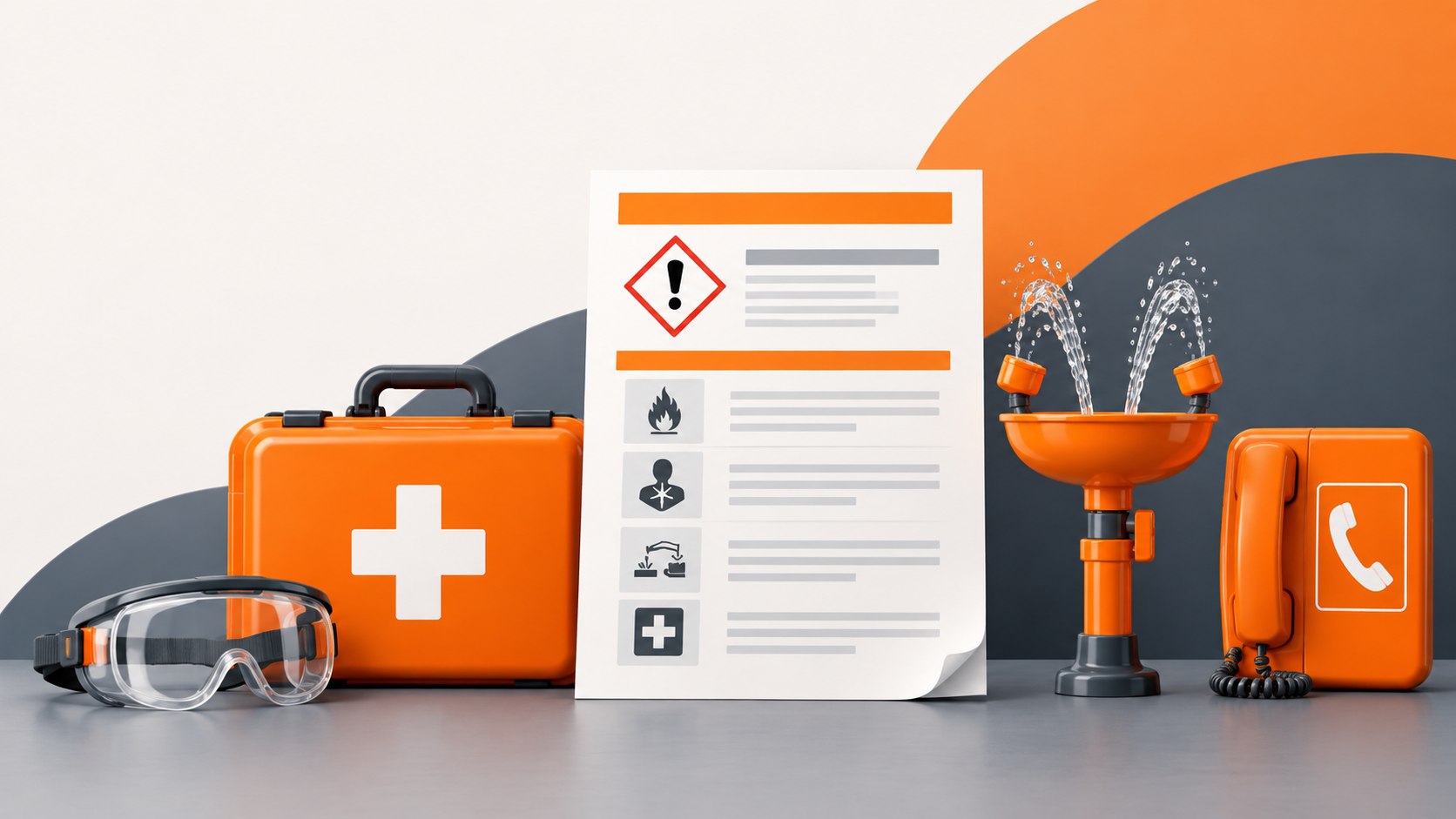
- SDS Section 4 describes first aid measures for relevant exposure routes, including inhalation, skin, eyes and ingestion.
- The workplace must turn supplier advice into an accessible response suited to the task, location and people present.
- First aid information should be read with the product identity, hazard and emergency contact details elsewhere in the SDS.
- A generic response for every chemical can be unsafe when products require different actions or urgent medical attention.
SDS Section 4 contains first aid measures for exposure to a chemical product. It is a starting point for planning what people should do after a splash, inhalation event or other contact. The workplace must check the exact product and translate the supplier's advice into accessible equipment, trained people and an escalation route at the place of use.
What information should Section 4 contain?
The safety data sheet (SDS) format is defined through REACH. Annex II guidance in the legislation text describes Section 4 as initial care understandable to an untrained responder and asks for advice by relevant exposure route: inhalation, skin, eye and ingestion. It also addresses immediate medical attention, delayed effects and protection for responders. Read the current sheet for the exact product rather than assuming two similar names share the same instructions.
Section 4 is not an invitation to improvise treatment. It may direct a responder to seek urgent medical attention or avoid a particular action. Keep the full current SDS accessible so first aiders and medical professionals can see product-specific details. Check Section 1 for product identification and emergency contact information and Section 2 for the hazard summary.
The Health and Safety Executive (HSE) notes that SDS information helps users assess chemicals but does not replace a workplace risk assessment. First aid planning therefore starts with the real task: what exposure could happen, where and to whom?
How do you connect advice to the task?
Map likely contact points. A laboratory pipette may pose eye or skin splash risk; a spray task can create inhalation and eye exposure; a decanting station may involve both. The COSHH assessment should identify which routes are credible, then ensure that the Section 4 response can be carried out in that location. HSE's assessment guidance asks employers to consider exposure routes and what workers should do in an accident or emergency.
Ask practical questions. Is suitable washing or eyewash available without passing through the release? Can a worker summon help if working alone? Does the team know the exact product name to relay to responders? If contaminated clothing needs to be removed, is there a plan that protects the person helping? The answer may require equipment or a change in work method before the product is used.
Avoid copying Section 4 verbatim into a poster if the wording is vague or refers to arrangements that do not exist on site. Preserve the supplier advice, but add local facts: where help is, how to call it and who meets responders. A local instruction should not contradict the SDS.
What if the SDS and workplace scenario do not align?
Check that the SDS matches the product, formulation and market. An old sheet, wrong concentration or different supplier may give misleading advice. If the document is unclear, contact the supplier or seek competent advice before relying on it. Do not guess the missing treatment from a generic web page.
Some tasks create substances that are not present in the starting product's SDS. Heating, reacting or spraying can change the exposure picture. The response plan needs to reflect the material or process actually encountered. Keep any specialist instruction with the procedure and make it available to those who could respond.
First aid is the response after prevention has failed. The assessment should still prioritise eliminating or controlling exposure through method, enclosure, ventilation and suitable protective equipment. HSE's control measures guidance includes emergency procedures within a wider system of control.
How should Section 4 be reviewed and practised?
Review when the supplier revises the SDS, the product or concentration changes, the task moves or the people working it change. Check that equipment and contacts remain available. A first aid plan written for a staffed weekday shift may not work in an unattended night laboratory.
Use a short scenario exercise: “A worker splashes this product in an eye; what is the first action, where is the equipment, and who calls for help?” The exercise should test access and communication, not ask staff to memorise medical detail. Record missing items and fix them before the next high-risk task.
The Safe Foundry feature overview shows ways to connect a product and its SDS; the help centre supports document access. The essential outcome is that the right Section 4 can be found quickly and its instructions can actually be followed at the work area.
What would a first-aid readiness check look like?
Choose one product used at a workstation and read its current Section 4 with the task owner and first-aid lead. Identify the plausible exposure routes in the real method. Then walk from the work area to the relevant washing or eyewash facility and confirm it is accessible, maintained and known to the workers. Check whether a person could call for help while assisting someone else. This short exercise turns a document review into a test of readiness.
Next, examine the information a responder would need to pass on. Is the product name clear on the container and local instruction? Can the SDS be opened without access to one absent manager's account? Does the incident form capture the time, route, product and actions already taken without asking a worker to make a medical judgement? These details support a safer handover to professional help.
How should different exposure routes be explained?
Do not merge inhalation, skin, eye and ingestion advice into one sentence. A task may make one route likely and another unlikely, but workers should still know where to find the full supplier instructions. In training, describe the local first action and escalation for credible events without attempting to memorise every medical detail. A simple scenario can test whether people know the route from exposure to help.
Be cautious with generic posters. “Rinse with water” may be too imprecise for a product or route, while other products may have special instructions. The exact current SDS and professional advice take priority. A local summary should identify the product and point to the full instruction, not replace it with an oversimplified slogan.
What if a product changes?
A supplier revision, new formulation or substitute can alter the response. Compare the new Section 4 with the old and identify whether equipment, training or emergency contacts need changing. Remove obsolete quick-reference cards from the work area so a responder is not faced with competing instructions. Keep the old SDS in the document history for audit, but clearly mark the current one for use.
If an incident shows the plan was hard to follow, investigate access and task design as well as individual behaviour. Was the eyewash blocked? Was the SDS stored behind a login? Did workers know which bottle was involved? Fix the system, brief the team and test the revised arrangement. The aim is a response that can work under pressure, not a perfect-looking document that nobody can use.
When several products are used at one station, avoid a quick-reference card that blurs their instructions together. Make identification the first step and provide a direct route to each current SDS. Test that route during a drill with someone who did not write the document.
Include night and weekend access in that test, because an emergency response cannot depend on office hours or a single person's login.
Frequently asked questions
Is SDS Section 4 the same as a workplace first aid procedure?
No. It provides supplier instructions; the workplace must also provide access, equipment, trained responders and local escalation.
Can I use first aid text from another product's SDS?
No. Check the exact product and current sheet because advice can differ with formulation and hazards.
Should an untrained worker interpret delayed symptoms?
No. Follow the product-specific advice and seek appropriate medical help where indicated.
What if the SDS is unavailable during an incident?
Use the site's emergency process and obtain the product identity and supplier information urgently; review document access after the event.
Workplace exposure limits in EH40 help assess airborne exposure in Great Britain. Learn what the figures mean, what they miss and how to review controls.
Spray Painting COSHH: Assessing Mist and Controls at WorkSpray painting COSHH assessments must consider aerosol mist, other workers and the whole paint task. Learn how to review booths, RPE and clean-up controls.
SDS Section 9: Physical Properties That Change RiskSDS Section 9 lists physical and chemical properties. Learn which values affect workplace exposure, storage and spill planning, and how to use them.