
How to Create a COSHH Assessment from a Safety Data Sheet
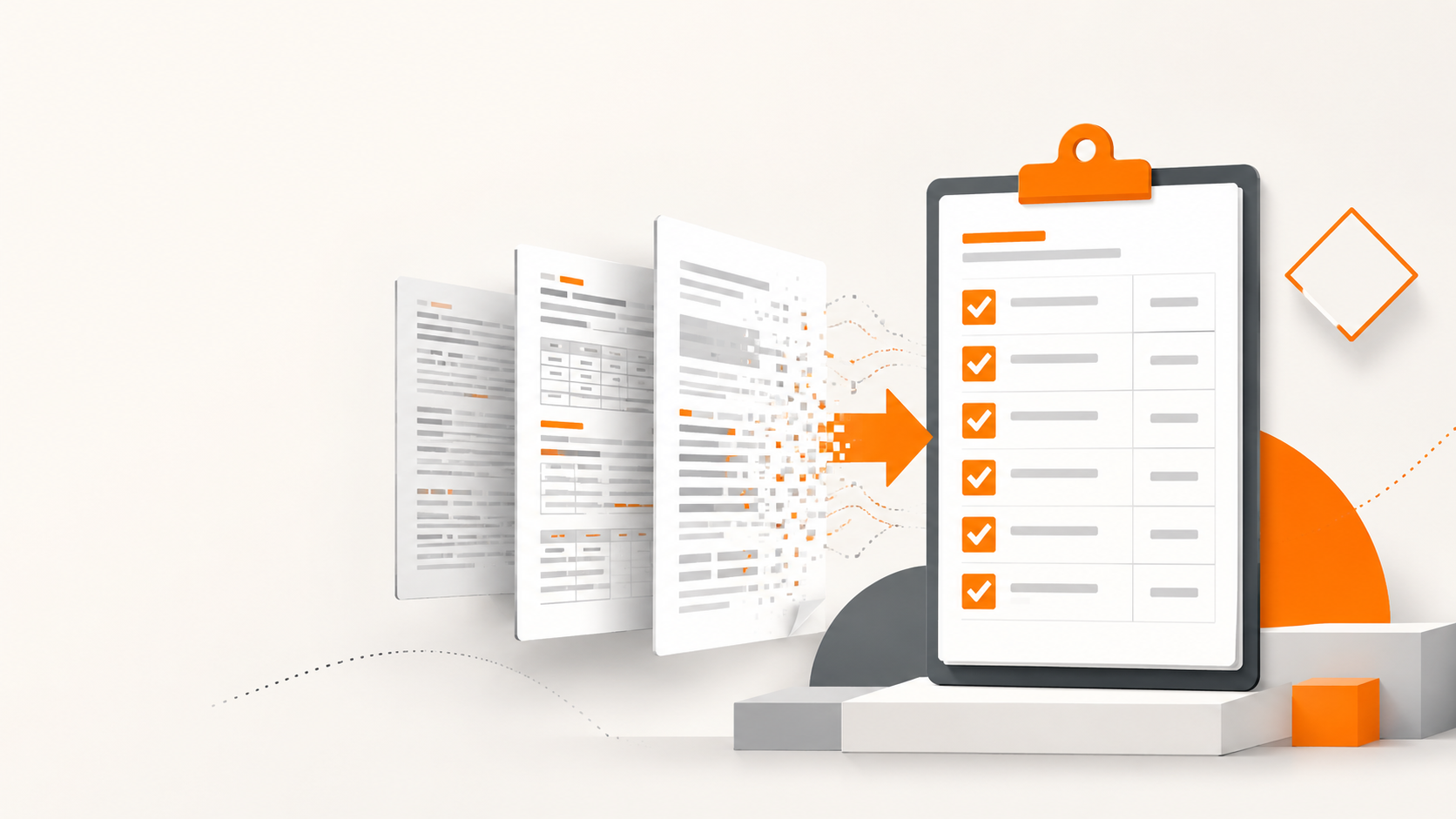
- A COSHH assessment is created from a safety data sheet by combining the supplier's hazard data with how your team actually uses the substance: quantity, frequency, duration, ventilation and who is exposed.
- The Health and Safety Executive states plainly that a safety data sheet is not a risk assessment, and that the information in it should be used to help you make your own.
- Sections 2, 3, 7, 8 and 11 of a safety data sheet carry most of the information a COSHH assessment needs, covering hazard classification, composition, handling, exposure controls and health effects.
- A safety data sheet cannot tell you your exposure risk, because it does not know your room size, your ventilation, your batch quantities or your task duration.
- Under COSHH, employers with five or more employees must record the significant findings of the assessment, and the assessment should be reviewed when the substance, process, equipment or people change .
A COSHH assessment is created from a safety data sheet by taking the hazard information the supplier provides and applying it to how your team actually uses the substance: the quantity, the frequency, the duration, the ventilation and the people exposed. The safety data sheet supplies the hazard data. Your assessment supplies the context, the controls and the written record. The Health and Safety Executive puts it directly: "A safety data sheet is not a risk assessment."
What is the difference between a safety data sheet and a COSHH assessment?
A safety data sheet (SDS) is a supplier document describing a chemical product's intrinsic hazards, in a 16 section format set out under UK REACH, Annex II. A COSHH assessment is an employer document describing the risk that product creates in your specific workplace and the controls you have put in place. One is generic and identical for every buyer of that product. The other is specific to your task, your room and your staff.
This distinction matters because the two are frequently conflated. Holding a full folder of current safety data sheets is not compliance with the Control of Substances Hazardous to Health Regulations 2002. It is the raw material for compliance.
Which safety data sheet sections do you actually need?
Five of the sixteen sections carry most of what a COSHH assessment needs. The rest support emergency planning, storage and disposal rather than the risk evaluation itself.
| SDS section | What it gives you | Where it lands in the COSHH assessment |
|---|---|---|
| 1. Identification | Product name, supplier, emergency contact | Substance identity and supplier details |
| 2. Hazard identification | GHS/CLP classification, hazard statements (H codes), pictograms, signal word | Hazard summary and severity |
| 3. Composition | Hazardous ingredients and concentration ranges | What is actually driving the hazard |
| 4. First aid | Route specific first aid responses | Emergency procedures |
| 7. Handling and storage | Safe handling advice, incompatible storage | Safe working procedures |
| 8. Exposure controls | Occupational exposure limits, engineering controls, PPE specification | Control measures and PPE selection |
| 11. Toxicological information | Health effects by route of exposure, acute and chronic | Routes of exposure and health outcomes |
Sections 5, 6, 10, 13 and 14 feed spill response, fire planning, waste and transport, which sit alongside the assessment rather than inside it.
Reading Section 2 correctly
Section 2 gives you hazard classification, not risk. An H315 statement (causes skin irritation) tells you what the substance can do, not how likely that outcome is for a technician decanting 50 ml once a week in a ventilated fume cupboard. Treat the H codes as your starting severity, then adjust for actual use.
Reading Section 8 correctly
Section 8 lists occupational exposure limits where they exist, along with recommended engineering controls and PPE. Two cautions apply. First, exposure limits quoted on a data sheet may reference other jurisdictions, so UK workplace exposure limits should be confirmed against HSE's EH40 publication. Second, the PPE named in Section 8 is a generic recommendation, often broad, and glove material and breakthrough time still need selecting against your actual contact time.
How do you create a COSHH assessment from a safety data sheet, step by step?
- Confirm the safety data sheet is current. Check the revision date in Section 16 and request a fresh copy from the supplier if the classification may have changed.
- Identify the substance and its hazards. Pull the classification, hazard statements and pictograms from Section 2, and the hazardous constituents from Section 3.
- Describe the task, not the product. Record what is actually done: decanting, spraying, mixing, cleaning, heating. State quantity per use, frequency, duration and location.
- Determine the routes of exposure. Use Section 11 alongside the task description to decide whether inhalation, skin contact, eye contact or ingestion are realistic in your setting.
- Identify who is exposed. Include operators, nearby staff, cleaners, maintenance workers, contractors and visitors, and flag any at increased risk.
- Check exposure limits and monitoring needs. Compare any workplace exposure limit against your likely exposure, and decide whether air monitoring or health surveillance is indicated.
- Select controls in order of the hierarchy. Eliminate the substance if you can, substitute for something less hazardous, enclose the process, add local exhaust ventilation, adjust systems of work, and only then rely on PPE.
- Record the significant findings and the residual risk. Note the controls in place, the PPE specified, the emergency and spill procedures, the training required and the review date.
- Communicate it. An assessment filed in a drawer controls nothing. Workers need the practical instructions distilled from it at the point of use.
Steps 1, 2 and 4 draw almost entirely on the data sheet. Steps 3, 5, 7 and 9 do not, and that is the part no document from a supplier can complete for you.
What can a safety data sheet never tell you?
A safety data sheet cannot tell you your risk level, because it has no knowledge of your workplace. Specifically, it does not know:
- Your room volume, air changes per hour or whether local exhaust ventilation is fitted and tested
- The quantity handled per task and how many times a shift
- Whether the substance is heated, sprayed, agitated or otherwise made more airborne
- Who works nearby, and for how long
- What other substances are used in the same space and whether effects combine
- Which glove material suits your contact time and dexterity requirements
This is also why generic COSHH templates downloaded from the internet tend to fail on inspection. They reproduce the data sheet and leave the workplace specific fields either blank or filled with wording that does not describe the real task.
How long does the SDS to COSHH conversion take?
Manually, a competent assessor typically spends somewhere between 30 and 90 minutes per substance, most of it spent locating and re-typing data from a PDF rather than thinking about controls. For a small laboratory holding 200 products, that is a substantial standing workload, and it recurs each time a supplier reissues a sheet.
Extraction is the mechanical part, and it is the part software handles well. Tools such as Safe Foundry read the safety data sheet, pull the classification, constituents, exposure limits and control advice into structured fields, and present a draft assessment for a competent person to complete with the task detail. You can see how that extraction works on our how it works page. What software should not do is decide your controls for you, which remains a judgement call for someone who has seen the room.
When should a COSHH assessment be reviewed?
Review when something changes: a new substance, a modified process, different equipment, a change in staff or working patterns, or after an accident, incident or near miss. Also review when the supplier issues a revised safety data sheet, since a reclassification can alter the hazard statements your assessment was built on. Many organisations additionally set a fixed review interval, commonly annually, as a backstop rather than a legal requirement in itself.
What are the common mistakes when converting an SDS into a COSHH assessment?
| Mistake | Why it fails |
|---|---|
| Filing the SDS as the assessment | The SDS describes the product, not your exposure. HSE treats it as an input only. |
| Copying Section 8 PPE verbatim | Generic glove and respirator advice, not matched to contact time or task |
| Assessing the product, not the task | The same product can be low risk in a fume cupboard and high risk when sprayed |
| Ignoring substances generated by work | Welding fume, wood dust and silica have no supplier data sheet |
| Using an out of date data sheet | Classifications change, and the assessment inherits the error |
| Skipping non operators | Cleaners, maintenance staff and contractors are often the unassessed exposure |
Substances produced by a process rather than purchased deserve particular attention, since there is no data sheet to start from and the assessment has to be built from HSE guidance and exposure data instead. Our chemical safety help centre covers that case separately.
This article is general guidance on process, not legal or compliance advice. For duties specific to your operation, consult HSE guidance directly or take competent advice.
Frequently asked questions
Do I need a COSHH assessment for every chemical we hold?
You need an assessment for substances hazardous to health that are used or generated at work, assessed by task rather than by product line. A substance kept sealed and never opened may warrant only a storage assessment, while one substance used in three different ways may need three task assessments.
Can I use the supplier's safety data sheet as my COSHH assessment?
No. The safety data sheet is generic to the product and identical for every customer, so it cannot record your ventilation, quantities, task duration or exposed staff, all of which the assessment must address.
Where do I find the workplace exposure limit for a substance?
Section 8 of the safety data sheet lists exposure limits where the supplier has provided them, but UK values should be confirmed against HSE's EH40 publication, since data sheets sometimes quote limits from other jurisdictions.
What do I do if a substance has no safety data sheet?
Substances generated by a process, such as welding fume, wood dust or flour dust, have no supplier data sheet, so the assessment is built from HSE sector guidance and any available exposure data instead. Ask the supplier first if the product is purchased, since a data sheet may simply be missing rather than unavailable.
Does a COSHH assessment have to be written down?
Employers with five or more employees must record the significant findings, and recording is recommended regardless of size because an unwritten assessment cannot be communicated, reviewed or evidenced. Details of what a compliant record contains are covered in our features overview and pricing page.
Learn how to assess process-generated dust and fumes without an SDS by defining the process, exposure routes, evidence and practical controls.
How to Check an SDS Matches the Chemical You UseCheck that an SDS matches your chemical by comparing product identifiers, supplier, concentration, form, label classification and intended use.
COSHH Assessment Review Checklist for UK WorkplacesUse this COSHH assessment review checklist to compare records with current tasks, products, exposure routes, controls and workplace evidence.