
COSHH Skin Exposure: Assessing Contact at Worksites
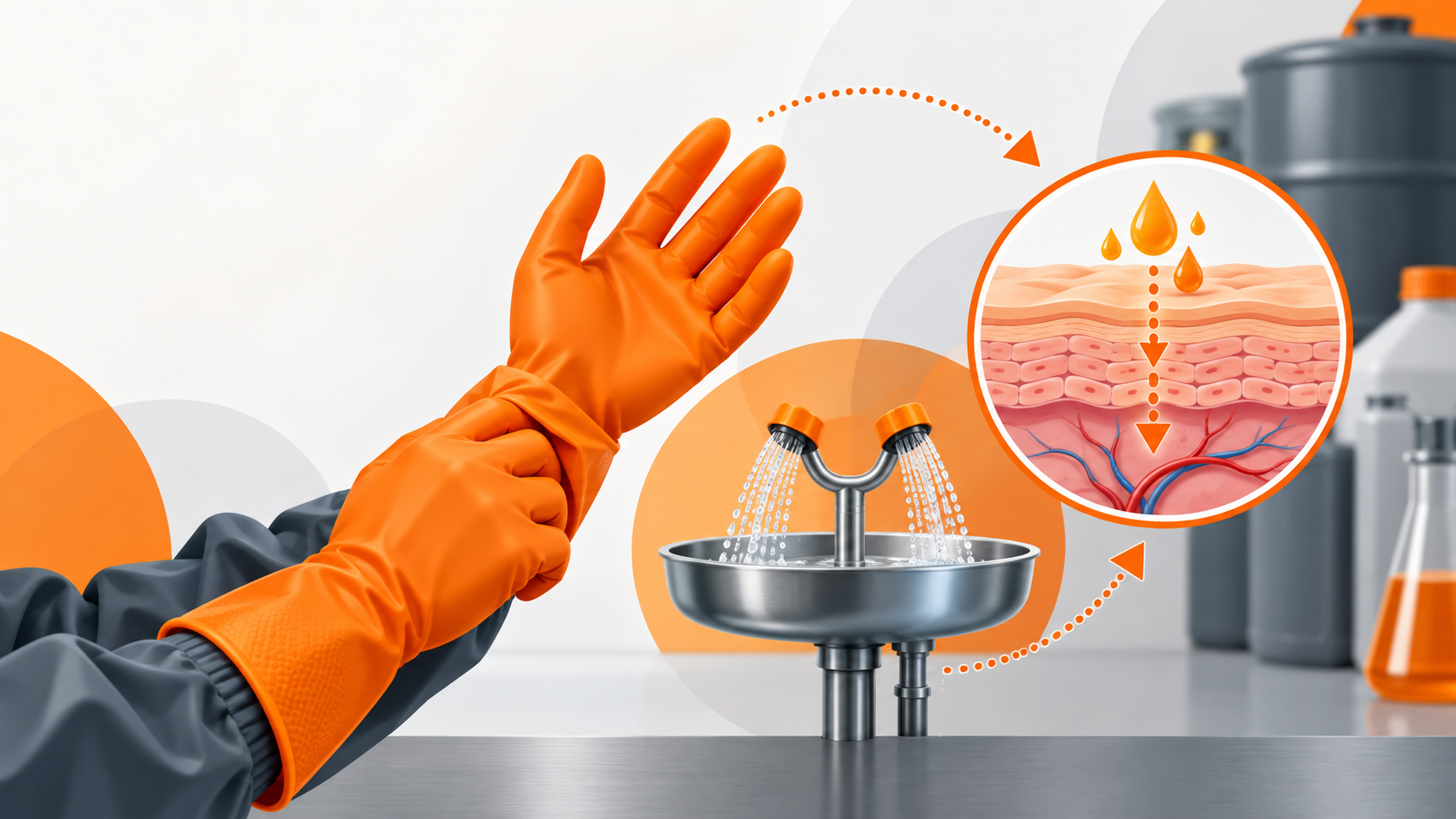
- COSHH assessments should identify skin contact as a distinct exposure route, including splashes and contaminated surfaces.
- Frequent wet work and repeated contact with cleaning products can contribute to dermatitis.
- Suitable gloves are one part of control; process design, hygiene and correct removal also matter.
- Skin symptoms or failed controls should trigger review of the task and, where appropriate, occupational health advice.
COSHH skin exposure occurs when a hazardous substance reaches skin during work, even if airborne exposure is well controlled. A useful assessment traces every contact point, from opening a container to removing gloves and cleaning tools. It then chooses controls that prevent or reduce contact before relying on protective clothing.
Where does skin contact occur during a task?
Watch the work from start to finish. A worker may touch a contaminated cap, handle a damp cloth, lean on a residue-covered bench or remove gloves with dirty fingers. Splashes are obvious; repeated low-level contact is easier to miss. The Health and Safety Executive (HSE) asks COSHH assessors to consider whether a substance can get onto or through skin, as well as whether it can be inhaled or swallowed. See HSE's assessment guidance.
List the product or process material, frequency, duration, contact area and who is exposed. A short splash risk during decanting differs from several hours of wet work. The product safety data sheet (SDS) can describe hazards and recommended precautions, but HSE warns that it is not the workplace assessment. It cannot tell you how often a worker's sleeve is soaked or whether a wash station is accessible.
Include surfaces and tools. A well designed enclosed process can still leave residue on handles during maintenance. The assessment should cover cleaning, changing consumables and disposing of contaminated material, not just normal production. If a worker must repeatedly contact a substance to make the process run, first ask whether the method can be changed.
Why is wet work relevant to COSHH?
HSE's cleaners guidance notes that prolonged or frequent wet hands can irritate skin and lead to dermatitis. It also notes that some cleaning ingredients may cause skin allergy or asthma. The absence of a dramatic hazard pictogram does not mean a worker can keep wet hands all shift without a skin risk. Frequency and work pattern matter.
Record how many wet tasks occur, when gloves are worn and how hands are washed and dried. A glove that traps moisture for an extended period can itself become part of the problem if poorly chosen or used without breaks. A hand-care regime should be practical in the real work area, including washing contamination off promptly, drying thoroughly and using suitable skin care as instructed locally.
Skin protection should not become a reason to leave a release uncontrolled. Replacing a spray with a wipe may reduce inhalation exposure but increase hand contact if the cloth is handled carelessly. Reassess the whole exposure picture when a method changes.
Which controls reduce contact at source?
Consider closed dispensing, tools that keep hands away from liquid, splash guards, stable containers, better positioning and a method that produces less residue. HSE's COSHH control guidance includes equipment, work procedures and hygiene measures. The aim is to make the safer method the normal method, not something workers need to improvise when busy.
Where gloves are needed, select them for the specific chemical and task using reliable supplier information and competent advice. Consider breakthrough resistance, length, cuff design, dexterity and whether the worker can remove them without touching the contaminated outer surface. Provide a place to change damaged gloves and dispose of contaminated ones. A generic “wear gloves” instruction leaves too many decisions to the user.
Protective clothing may also be needed for arms or body, but only if it fits the task and can be removed without spreading contamination. Check that washing facilities and clean storage are available. Train workers to recognise when a glove or garment has failed and to report symptoms early rather than treating irritation as an expected part of work.
How do you check whether controls work?
Observe the method and ask workers where contact still occurs. Look for wet cuffs, contaminated handles, reused disposable gloves and workarounds that create new contact. Review after product changes, process changes, spills or symptoms. A form may state “no skin contact” while the workbench tells a different story.
HSE explains that health surveillance may be necessary where a disease is associated with the substance, it can be detected early and workplace conditions make it likely. It is not a replacement for exposure control. Clinical matters need appropriate occupational health input and confidential handling of personal information.
Keep the skin-exposure decision alongside the task and SDS so later reviewers can see why a control was selected. The assessment workflow and feature overview show how a team can link those records. The practical test is whether the worker can complete the task without routine contact and knows what to do if contamination occurs.
What would a skin-contact walk-through find?
Take a worker who fills small containers from a larger drum. The written procedure says gloves are worn, but observation shows the worker steadies the receiving bottle with one hand, touches a wet cap and then uses a shared door handle. The control problem is wider than glove selection: the transfer may need a better holder, a cleaner closure method and a way to avoid spreading residue. Walk-throughs are most useful when the worker can describe awkward steps honestly.
Record contact points in sequence: before the transfer, during the pour, when closing the source, during clean-up and when removing protective equipment. Note which hand or body area is exposed, whether contact is repeated and whether clothing is contaminated. This helps separate a rare splash from frequent low-level contact and select controls that address both.
How should glove use be checked?
Check the exact product and supplier information, then review glove material, cuff length, fit, task time and replacement. Ask whether workers can pick up small tools and operate controls without removing the gloves. Provide a clean place to put on and remove them and a clear disposal or cleaning method. If gloves are routinely reused beyond their intended life, the programme needs better supply and supervision.
Do not judge success only by whether gloves are present in a photograph. Look for contamination on the inside, damage, damp skin and residue transferred to phones or shared equipment. If workers repeatedly touch contaminated surfaces, improve the method and housekeeping. PPE is more reliable when the work is arranged to reduce contamination in the first place.
After any report of skin symptoms, ask whether others doing the same work have similar contact and whether a recent product or process change explains the timing. Protect personal medical information while reviewing the shared task. The aim is early control improvement, not a retrospective search for fault.
Which records make skin controls reviewable?
Keep the product identity and SDS revision, task method, observed contact points, chosen equipment and hand-care arrangement together in the assessment. Record what a worker should report and who will investigate. A glove specification alone is incomplete if the task changes or the model is substituted at purchasing time. When a new glove is supplied, check its suitability rather than assuming it offers the same protection.
At a review, compare written controls with observations and worker feedback. A clean incident log does not prove no contact occurs; workers may regard repeated splashes as normal. Ask about routine discomfort and workarounds, then improve the method and check again.
Repeat the observation after changes are made.
Frequently asked questions
Is skin contact relevant if air monitoring is below a workplace exposure limit?
Yes. Air monitoring describes an airborne route; it does not show whether a substance is contacting skin.
Are disposable gloves always enough for chemical work?
No. Glove material, fit and use must suit the specific chemical and task, and the process should reduce contact at source where possible.
Can an unlabelled product cause a skin risk?
Yes. An unknown product should be isolated and identified through the site's procedure rather than handled on an assumption that it is harmless.
When should skin symptoms be reported?
Report them promptly through the workplace process so the task and controls can be reviewed and appropriate occupational health advice sought.
Workplace exposure limits in EH40 help assess airborne exposure in Great Britain. Learn what the figures mean, what they miss and how to review controls.
Spray Painting COSHH: Assessing Mist and Controls at WorkSpray painting COSHH assessments must consider aerosol mist, other workers and the whole paint task. Learn how to review booths, RPE and clean-up controls.
SDS Section 9: Physical Properties That Change RiskSDS Section 9 lists physical and chemical properties. Learn which values affect workplace exposure, storage and spill planning, and how to use them.