
Do Cleaning Products Need a COSHH Assessment?
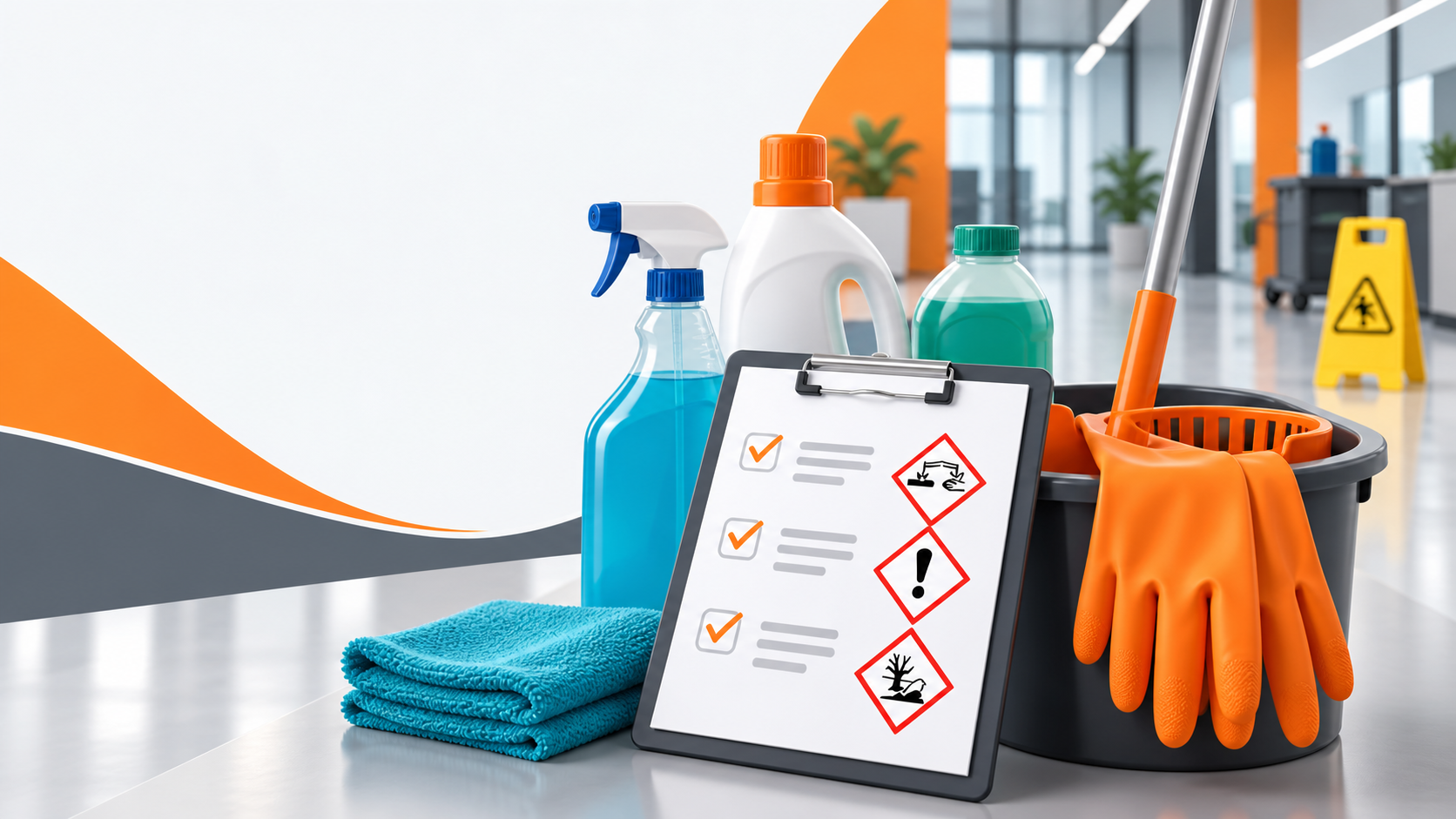
- Cleaning products need COSHH assessment when they are hazardous to health or their workplace use creates a health risk, even if they are familiar consumer products.
- Assess the task rather than the bottle alone because spraying, dilution, dwell time, poor ventilation and frequent skin contact can change exposure.
- Never mix cleaning products unless an approved procedure confirms compatibility; acid cleaners and hypochlorite products can release toxic gas when combined.
- Substitution, dosing systems, ventilation and safe methods should be considered before relying on gloves or respiratory protective equipment.
Cleaning products need a COSHH assessment when they are hazardous to health or when the way they are used creates a health risk. A product sold for domestic use is not automatically low risk at work, because cleaners may use larger quantities, stronger concentrates, spray methods and repeated skin contact.
The assessment should cover the task, not simply copy the label. Dilution, ventilation, contact time, incompatible products and the people doing the work all affect risk.
Which cleaning products can fall under COSHH?
Common examples include disinfectants, descalers, oven cleaners, drain cleaners, degreasers, solvent cleaners, bleach products, acids, alkalis and products containing sensitisers.
COSHH also covers hazardous substances generated by the work. Aerosol or mist from spraying, dust from powdered cleaners and toxic gas created by accidental mixing can be more important than the closed bottle.
HSE's definition of substances hazardous to health includes chemicals, products containing chemicals, dusts, vapours, mists, gases and biological agents.
Do ordinary household products need assessment at work?
Assess the workplace use rather than the retail channel. A washing-up liquid used briefly by one person may justify a simple, proportionate decision, while the same type of detergent used for hours of wet work can contribute to dermatitis.
A bathroom cleaner used weekly in a ventilated room is different from daily spraying in dozens of small cubicles. Frequency, duration and method can turn a familiar product into significant occupational exposure.
Do not use the absence of a dramatic pictogram as the only screen. Some health risks arise from repeated contact, dilution errors or process-generated mist.
What information should you gather?
Start with the current supplier label and SDS where one is provided. Confirm the exact product and concentrate, not a similar fragrance or brand variant.
Record:
- Task and work area.
- Product, supplier and SDS version.
- Concentrate and in-use dilution.
- Quantity and frequency.
- Application method, including spray, foam, wipe or machine dosing.
- Routes of exposure: inhalation, skin, eyes and accidental ingestion.
- People exposed, including cleaners, occupants and contractors.
- Existing ventilation, dispensing, equipment and hygiene controls.
- Storage, spill, waste and emergency arrangements.
- Training, supervision and language or literacy needs.
Observe real work. A written dilution ratio does not prove the dosing unit is used or maintained.
Why does spraying change the assessment?
Spraying creates droplets and can increase inhalation and eye exposure. Fine mist may spread beyond the immediate surface and affect other people in the area.
Ask whether spraying is necessary. Pre-dosed wipes, foam applicators, coarse streams or applying product to a cloth may reduce airborne spread, provided the alternative remains effective and does not increase skin contact or another risk.
If spraying remains necessary, assess ventilation, distance, direction, duration and access restrictions. Respiratory protective equipment should not be the automatic first answer.
Why is wet work important?
Frequent hand washing, prolonged glove use and repeated contact with water and detergents can damage the skin barrier. Dermatitis risk can exist even when an individual product is not strongly classified.
Controls include reducing immersion, using tools, choosing less irritating products, providing suitable gloves for defined tasks, drying hands thoroughly and supporting skin-care procedures. Health surveillance may be appropriate where the COSHH criteria are met.
Gloves can cause problems when the material is incompatible, the inside becomes contaminated or hands remain wet for long periods. Specify, inspect and replace them rather than saying only “wear gloves”.
Which cleaning products must not be mixed?
Never mix products unless an approved procedure based on reliable information explicitly requires it. Particularly serious combinations include:
| Combination | Possible consequence |
|---|---|
| Hypochlorite bleach + acid cleaner | Toxic chlorine gas |
| Hypochlorite bleach + ammonia-containing product | Harmful chloramine gases and related reaction products |
| Acid + strong alkali | Rapid heat, boiling and corrosive splashing |
| Oxidising cleaner + organic or flammable product | Fire or vigorous reaction |
Product names can hide chemistry. A toilet cleaner may be acidic, and a disinfectant may contain hypochlorite or another oxidiser.
Separate incompatible products in storage and waste. Do not pour residues into the same bucket or drain without an approved method.
How should concentrates and dilution be controlled?
Concentrates often present greater corrosive, irritant or sensitising hazards than the working solution. Use closed or metered dosing where reasonably practicable.
A good dilution system:
- Prevents free pouring from heavy containers.
- Produces a repeatable concentration.
- Uses a compatible, labelled secondary container.
- Prevents backflow or accidental mixing.
- Is maintained and checked.
- Gives clear instructions for abnormal conditions.
“Add a splash” is not a controlled method. More product can increase exposure, leave residues and waste money without improving cleaning.
What controls should be considered first?
Follow the COSHH hierarchy:
- Remove an unnecessary product or task.
- Substitute a less hazardous product or form.
- Use closed dosing, enclosure or automation.
- Improve ventilation and application method.
- Limit access, quantity and duration.
- Provide suitable PPE for residual exposure.
- Train, supervise, maintain and review the controls.
HSE's COSHH control guidance explains the objective of preventing or adequately controlling exposure.
What should the assessment say about PPE?
Specify the item and its limitations. For gloves, identify a suitable material and replacement arrangement using product and task information. For eye protection, consider splash energy and whether a visor is also needed.
If respiratory protective equipment is required, select it for the contaminant and concentration, ensure face fit where tight-fitting equipment is used, manage facial hair and provide training, storage and maintenance.
PPE does not correct an avoidable spray cloud or uncontrolled concentrate transfer.
How should cleaning products be stored and labelled?
Keep products in their original containers where practicable. Label approved decanted bottles with product identity, hazards, dilution and other information needed by the procedure.
Never use drinks bottles. Keep acids, alkalis, oxidisers and flammables in assessed compatibility groups with separate containment where needed.
The chemical register should include cleaning cupboards, housekeeping trolleys, vehicles and contractor stock. Safe Foundry's workflow can connect supplier information to task-based assessment; see features and the help centre.
When should the cleaning COSHH assessment be reviewed?
Review when the product, formulation, dilution, equipment, area, frequency or workforce changes. Also review after symptoms, a spill, accidental mixing, failed dosing or evidence that staff cannot follow the procedure.
The practical question is not “is this just a cleaner?” It is “how can this product reach people during this cleaning task, and are the controls reliable every time?”
Frequently asked questions
Do I need a COSHH assessment for washing-up liquid?
Not automatically for every use, but assess whether the product and task create a health risk, including frequent wet work and skin exposure. Record proportionately where required.
Do household cleaning products need COSHH assessments at work?
Consumer availability does not remove employer duties. Workplace quantity, frequency, method and exposure can differ substantially from normal domestic use.
Can bleach and toilet cleaner be used together?
No. Hypochlorite products can release toxic chlorine gas when mixed with acids, including some toilet cleaners. Keep them separate and follow supplier instructions.
Does wearing gloves complete the COSHH assessment?
No. First consider substitution, dilution control, dispensing, ventilation and work method, then select compatible gloves for the residual risk and manage their use.
Learn how to assess process-generated dust and fumes without an SDS by defining the process, exposure routes, evidence and practical controls.
Chemical Stocktake Checklist: What to Record and CheckUse this chemical stocktake checklist to reconcile containers with your register, verify SDS links, find storage issues and assign follow-up actions.
Chemical Storage Inspection Checklist for UK WorkplacesUse this chemical storage inspection checklist to find container, label, segregation, quantity, spill-control and housekeeping problems early.