
Chemical Spill Response Plan: A Guide for UK Teams
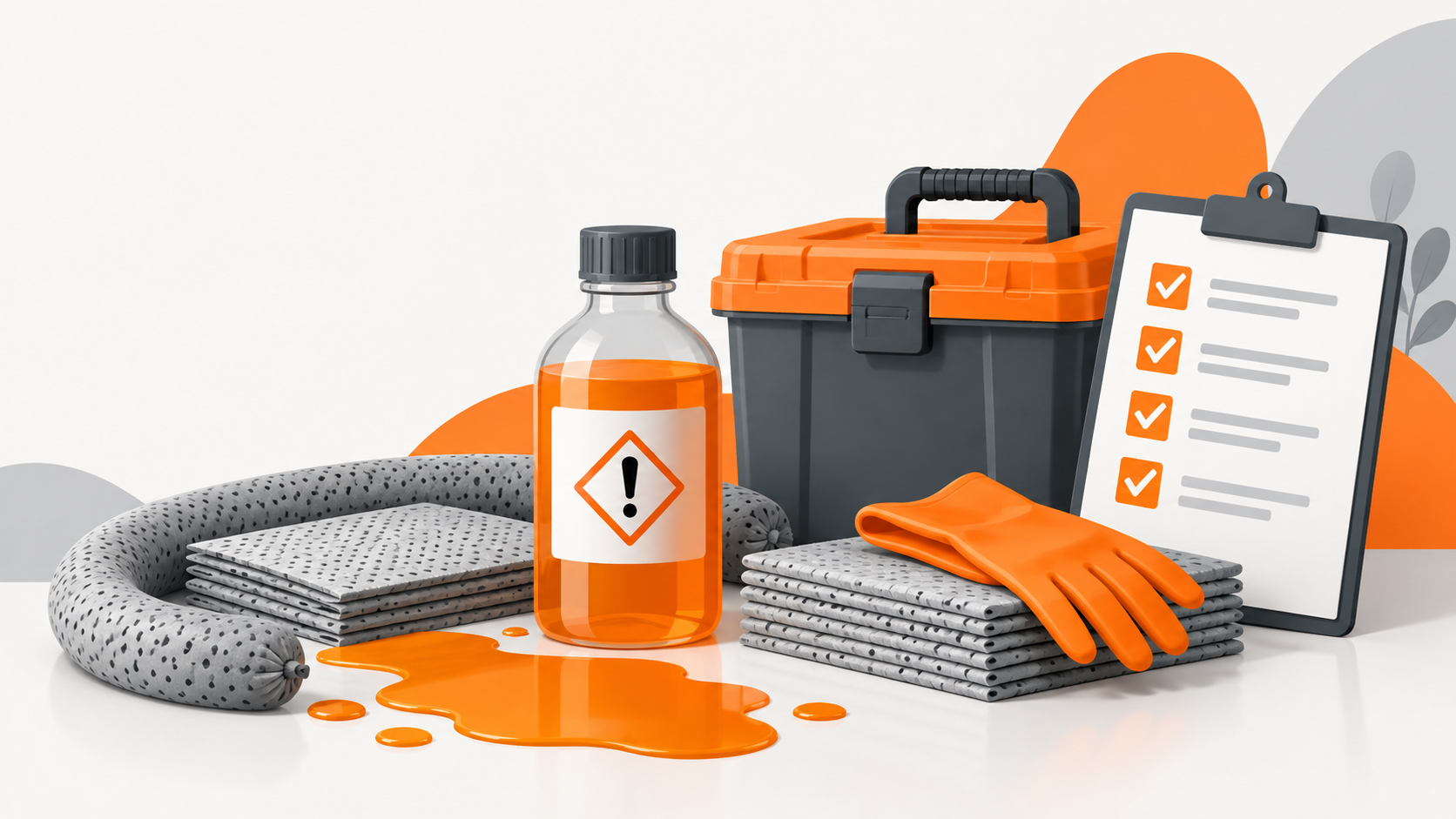
- A chemical spill response plan should match credible spill sizes, substance hazards and the people and drains near the work.
- The first decision is whether trained site staff can manage the release safely or must withdraw and call for specialist help.
- Spill kits are useful only when their contents, location and users match the assessed scenario.
- Every spill and near miss should feed back into container, handling and storage controls.
A chemical spill response plan sets out what people should do when a container leaks, tips or breaks. It should distinguish a small release that trained staff can manage from an incident that requires evacuation and specialist help. Build the plan from the substances, quantities and layout of the actual workplace, then practise the decisions it asks people to make.
What should be assessed before choosing a spill kit?
Start with credible release scenarios. A dropped 500 ml bottle, a damaged 20 litre drum and a leaking transfer hose are different events. Note the largest container, where it is moved, the surface and gradient, nearby drains, ventilation, ignition sources and people who may enter. The product's safety data sheet (SDS), especially its accidental-release and first-aid sections, is useful input, but HSE cautions that an SDS is not a workplace risk assessment.
Work through the exposure routes. Could vapour or mist reach people away from the liquid? Could a responder step into the spill or contaminate gloves while handling absorbent material? Could a corrosive splash reach eyes? A plan that only says “absorb and dispose” misses the moments when workers are most likely to be exposed. HSE's COSHH assessment guidance asks employers to consider who could be harmed, existing controls and what further action is needed.
Also assess whether the product creates fire, explosion or environmental concerns beyond its health effects. Those issues may require additional arrangements under other regimes. Do not ask a generic COSHH sheet to cover every hazard. Record who owns the response plan and how it links to wider site emergency procedures.
Who should respond and when should they withdraw?
Define a clear boundary between alerting and clean-up. Any worker should know how to warn others, avoid direct contact and report the location and product if known. Only trained people with suitable equipment should attempt containment or clean-up within the scenario for which they have been prepared. If the identity is uncertain, the release is beyond the planned amount, symptoms occur or the route of exposure cannot be controlled, the plan should direct staff to move away and escalate.
Avoid asking workers to identify an unknown chemical by smell, colour or a guess from its location. The container may be mislabelled, and a strong odour does not reliably indicate the level of hazard. Preserve uncertainty in the incident report and bring in competent advice. The response should protect bystanders and prevent well-intentioned people from entering the area while the situation is assessed.
Assign roles before an incident: who calls for help, who restricts access, who retrieves the SDS, who checks whether someone needs first aid and who authorises a return to work. A rota or contact list should work outside office hours as well as during a normal shift. If contractors are present, include how they are alerted and who leads the site response.
What equipment should be available?
Select absorbents, containment materials, collection containers and protective equipment against the actual products and quantities, following supplier information and competent advice. A kit that is too small, incompatible or locked in another building is not an effective control. Put it where it can be reached without crossing the spill and check it after use and at planned intervals.
First-aid arrangements also need to reflect foreseeable contact. Workers should know the location of relevant eyewash or washing facilities and how to get medical help when indicated by the product information. Do not improvise treatment from a blog article; use the current SDS and site procedure. HSE's COSHH controls guidance includes spillage capture, decontamination and clean-up among control measures.
Containment should not create a new exposure. Blocking a drain may be appropriate only when it can be done safely. A worker should not kneel in a pool of liquid or work in vapour to save a small amount of product. The plan needs an explicit stop point when conditions exceed the training or equipment available.
How should the plan be practised and reviewed?
Walk the route with the people expected to act. Can they find the spill kit, current SDS and emergency contacts? Can they recognise the withdrawal trigger? Can the named person isolate the area without sending others through it? A short tabletop exercise may reveal a missing key, poor signage or a contact who is never on site at night.
After an incident or near miss, record what escaped, where, how it was handled and whether anyone was exposed. Review the earlier controls: container choice, storage, transport, decanting and supervision. Preventing the next release is more valuable than repeatedly improving clean-up. HSE advises reviewing COSHH assessments and controls after accidents, near misses and changes in work.
Keep the spill plan linked to the controlled product and task information; the chemical safety feature overview and help centre show how teams can organise those records. A good plan lets a worker answer three questions immediately: what is known, who should be warned and whether it is safe for trained staff to act.
What would a realistic drill reveal?
Imagine a sealed container has fallen from a shelf in a stores room. Do not assume the label is readable from a safe distance or that the spill is the only hazard. During a tabletop drill, ask the first person on scene how they would keep others out, identify the location without approaching the liquid and contact the responsible person. Ask the trained responder where the current SDS, kit and disposal container are. Then test the decision that matters most: at what point would they withdraw because the release exceeds the planned response?
Run the same scenario outside ordinary hours. Perhaps the store is open to a contractor but the kit cupboard is locked, or the named responder is not on that shift. Those are design faults in the plan. Fix the location, access or rota before relying on the procedure. A drill need not create a real release; it should expose gaps in communication and equipment while the consequences are low.
Which records make a response plan reviewable?
Keep a short inventory of credible spill scenarios with their products, container sizes, locations and planned response level. Link each to the SDS revision, responder training, kit inspection and relevant emergency contact. After a drill or event, record the decision made, what worked, what failed, who owns each action and when it was closed. This is enough to show whether the plan changed in response to evidence, without turning an emergency instruction into a long policy manual.
Review trends as well as single incidents. Several small drips during decanting may point to an unsuitable spout or unstable receiving container. Repeated missing absorbent packs may mean the replenishment process is broken. Close the loop by changing the task, then check whether the next inspection or drill shows improvement.
Before accepting the plan, ask someone outside the authoring team to follow it from the work area. If they cannot identify the first safe action, the response boundary or the right contact, simplify the instruction. A useful plan is understood by the person who discovers the spill, not only by the specialist who wrote it. Check that temporary workers receive the same briefing.
Frequently asked questions
Does every chemical spill need the same kit?
No. Kit contents should be selected for the substances, credible quantities and response method at that location.
Should an employee clean up an unknown spill?
The safe response is to alert others, avoid contact and use the site's escalation procedure until the substance and conditions are assessed by a competent person.
Is the SDS enough to write a site spill plan?
No. The SDS supplies product information, while the site plan must also account for container size, layout, drains, people and available responders.
What should happen after a small spill with no injury?
Record and review it. A small spill may expose a weakness in storage or handling before a more serious event occurs.
Workplace exposure limits in EH40 help assess airborne exposure in Great Britain. Learn what the figures mean, what they miss and how to review controls.
Spray Painting COSHH: Assessing Mist and Controls at WorkSpray painting COSHH assessments must consider aerosol mist, other workers and the whole paint task. Learn how to review booths, RPE and clean-up controls.
SDS Section 9: Physical Properties That Change RiskSDS Section 9 lists physical and chemical properties. Learn which values affect workplace exposure, storage and spill planning, and how to use them.